Monday, 6 April 2020

Guilty Pleasures: James Hilton

The first James Hilton I read was Lost Horizon. It was one of those books that I had heard about, but I don't know where I heard about it. I found it in Eswari Lending Library, that Aladdin's cave of books in Lloyd's Road, back in the early 80s. I remember the cover too - lurid yellow, with an extremely Oriental woman and and leering man in the background - this one.
I remember liking it very much. The only other book by Hilton in the library was Goodbye Mr Chips, which I devoured. After all, I had just passed the age of reading about boarding school antics, from Malory Towers to Greyfriars and found the lifestyle fascinating (though a common threat for bad behaviour from my mother was that she would put me in a hostel if I didn't behave any better).
I don't quite remember when I first read Random Harvest, but I'm quite sure this was after I became interested in the Golden Age of Hollywood. Halliwell had given it three stars, and the movie itself was hokum, but sincerely done, with a magnificent cast.

It was only later that I really read it, and I found I enjoyed it very much.
Charles Rainier is an industrialist and a Conservative MP, to all intents and purposes, a very successful man, with a lovely wife who is also an accomplished hostess. But there's something that he's missing, an emptiness that he has been trying to fill in his life.
We learn that there is a gap in his memory, a period of three years he remembers nothing about, three years that took place after he was wounded in the great war, and then he woke up in 1920, recovering from an automobile accident, with no memory of what happened to him, from 1917 to the moment he regains consciousness from the accident.
The story is about how he tries to to recover those memories, but its also about the period between the two world wars. Chronologically, the story begins with Armistice Day, 1917, and ends on September 1, 1939, and the picture it draws of England between the wars is fascinating.
Rainier is upper middle-class, and after rejoining his large family, decides to go to Cambridge - something he thoroughly enjoys, but he gives it up to take control of the family businesses.
It's a portrayal of the English upper classes that's a great deal more affectionate than, say Waugh, even though there are characters who could move seamlessly between the two worlds.
Jill could afford once more her cruises and flirtations, with no handicaps to the latter except advancing middle age and none to the former save an increasing difficulty in finding new places to cruise to. Julia and her husband lived in Cheltenham, playing golf and breeding Sealyhams; George and Vera preferred town life and had taken a newly built maisonnette in Hampstead. Julian was at Cannes, doing nothing in particular with his usual slightly sinister elegance; once or twice a year he turned up in London, took Charles for lunch to the Reform Club, and worked off a few well-polished epigrams. Bridget had married an officer in an Irish regiment and lived in a suburb of Belfast. She had had one child, a boy, and was expecting another. With George's girl and Julia's boy and girl, this made a problematical five as against seven of the previous generation, unless (as Chet put it) Charles hurried up. They were not, however, at all anxious for Charles to hurry up; and as both Lydia and Jill were past the age when any amount of hurry might be expected to yield result, and as Vera was sickly and Julia (so she boasted) had nothing to do with her husband any more, the ratio really depended on Bridget—plus, of course, an outside chance from Charles. Nobody even considered Julian in such a connection.
Hilton's prose is simple - and surprisingly economical. It doesn't thrust itself forward, but with a couple of sentences, he establishes the characters of Charles' family, individually and as a unit.

There's also the Al Stewart aspect - who I kept thinking of as I read the novel. Many of Stewart's songs - Post World War II Blues, A League of Notions, Trains - all take you through periods of history, painting pictures with a few words, and deceptively muzak-sounding music, until you realize that there's a considerable amount of artistry behind it. It's much the same way with Hilton. And this is about an England between 1917 and 1939.  The very next paragraph to the one above switches from the personal to the political.
Much more, though, had happened between 1921 and 1924. The ancient Irish problem had apparently been settled; a conference at Washington had arranged limitation of naval armaments between England, Japan, France, and the United States; someone had almost climbed Everest; the German mark had collapsed and French troops had entered the Ruhr; Mussolini was rebuilding Italy and had already bombarded Corfu; there had been an earthquake in Japan, there had almost been another war with Turkey, there was still a war in Morocco, and there was going to be an exhibition at Wembley.
And through it all is Charles Rainier, a decent man, but also, like so many of Hilton's heroes, curiously passive. Not to suggest that he isn't capable of action, quite the contrary, but it is disinterested action - a very Bhagavad Gita kind of action. He's as much observer as doer.
Hilton was a bestselling author in his time, and many of his books were filmed. And one of the greatest advantages he had were the actors who portrayed his heroes were definitive examples of decent, gentle Englishmen - Robert Donat in Knight without Armour and Goodbye Mr Chips, and Ronald Colman in Lost Horizon and Harvest. And their performances do so much to cement the idea of the decency of heroes.
Donat and Dietrich in Knight Without Armour

Colman as Rainier and Garson as Paula Ridgeway in Random Harvest

Nineteen twenty-five was another improving year, the year of Locarno, the false dawn. It was a year perhaps typical of the twenties in its wishful optimism backed by no growth of overtaking realism; another sixpence off the income tax, another attempt to harness a vague shape of things to come with the even vaguer shapes of things that had been. For the public would not yet look squarely into that evil face (publishers were still refusing "war books") and few also were those who feared the spectre might return. The England hoped for by the majority of Englishmen was a harking back to certain frugalities of the past (lower and lower income tax, smaller and smaller government expenditure) in order to enjoy more and more the pleasures of the present; the Europe they dreamed of was a continent in which everybody placidly "saw reason," while cultivating summer schools, youth hostels, and peasant-costume festivals in the best tradition of Hampstead Garden Suburb; in exchange for which the City would make loans, trade would thus be encouraged, and taxes fall still further. Mixed up with this almost mystic materialism was the eager, frightened idealism of the Labour Party (both the eagerness and the fright came to a head a year later, in the General Strike); the spread of the belief that the League of Nations never would be much good but was probably better than nothing, a belief that effectively converted Geneva into a bore and anyone who talked too much about it into a nuisance. Meanwhile a vast and paralysing absence of hostility gripped Englishmen from top to bottom of the social scale, not a toleration on principle but a muteness through indifference; they were not AGAINST the League of Nations, they were not AGAINST Russia, they were not AGAINST disarmament, or the Treaty of Versailles, or the revision of the Treaty of Versailles, or the working classes, or Mussolini—who had, after all, made the Italian trains run on time. "

I've called Hilton a "guilty pleasure", and I have often wondered why. I've read worse writers with pleasure and have made no bones about it. I sincerely believe that guilty pleasures are signs of snobbery (not that I'm immune to snobbery myself, but I try to guard against it myself ). But sometimes I feel embarassed that I like Hilton. Maybe it's because of the exaltation of a certain kind of Englishman, a certain kind of Englishness - which as an Indian, I instinctively distrust.
Consider this bit.
The very absence of all these things was English, Rainier said—something offhand but good-humoured, free but obedient, careless but never heartless.
"But tell that," he added, "to the Indians in Amritsar, to the Chinese who read the notice in a Shanghai park, 'No Dogs or Chinese Allowed,' to the tribesmen in Irak, to the peasant in County Cork, to the..." But then he laughed. "God, how we're hated! It isn't so much because we really deserve it. Even at the bottom of the charge-sheet I could quote Santayana's remark that the world never had sweeter masters. SWEET—a curious adjective —and yet there IS a sweetness in the English character, something that's almost perfect when it's just ripe—like an apple out of an English orchard. No, we're not hated altogether by logic. It's more because the world is TIRED of us—BORED with us—sickened by a taste that to some already seems oversweet and hypocritical, to others sour and stale. I suppose the world grew tired of the Romans like that, till at last the barbarians were excused for barbarism more readily than the Caesars were forgiven for being tough. There come such moments in the lives of nations, as of persons, when they just can't do anything right, and the world turns on them with the awful ferocity of a first-night audience rejecting, not so much a play it doesn't want, as a playwright it doesn't want any more... But wait till they've experienced the supplanters—if we are supplanted. A time may come when a cowed and brutalized world may look back on the period of English domination as one of the golden ages of history..."
Naturally, as someone from one of England's former colonies, this irritates me.
But then, the India I live is the India of Delhi in 1984, of Gujarat in 2002 and Delhi in 2020.

"But wait till they've experienced the supplanters—if we are supplanted. A time may come when a cowed and brutalized world may look back on the period of English domination as one of the golden ages of history..."

And I wonder.

Thursday, 19 March 2020

The Nameless King

As part of my "self-isolation", I've been doing three things: gaming, reading and writing; in that order. The ratio would probably be 80:15:5.
And over the course of four days last week, I've played a certain section of a game over and over and over.
The game is Dark Souls III. If you're into games at all, you know what I'm talking about. If you aren't, well, it's a fiendishly hard game. But, it's also fair. It requires, atleast in the initial playthroughs, a lot of caution, and a lot of dying.
 
This is a Filk song for the game. And it captures it quite well

Souls games begin with you waking up undead, and navigating a short tutorial section, before you face a boss enemy - to whom you will die a few times, before making your way to the game's hub area.
From there, you go on, looking for the MacGuffins - bells to ring, items to collect, and at the end of each area is a boss - usually a punishingly hard boss. And you die, and you run the "gauntlet of misery" back to the boss, until you manage to survive the encounter.

I spent four days - around twenty hours - just fighting one of them.

In the game's mythos, he is the exiled son of the thunderbolt wielding prime deity. This world survives because of the first flame, which provides heat and light, and keeps darkness at bay. And in the beginning, Gwynn, the God of Thunder defeated the primordial dragons, but his eldest son, and the Gods' greatest warrior, betrayed them, and joined the dragons instead. He was banished, and all records of his existence were destroyed.
He is the guy I spent all those hours fighting.
The run-up to the fight is epic in itself. The area is called Archdragon Peak, and you battle your way through vicious serpent-men who can destroy you in a couple of hits. You run past one dragon that lands in your path, weaving through ruins filled with enemies, dodging gusts of fire when you get out in the open, until you get to a point where you can strike at the dragon's weak spot. Then you toil up a mountain side face off against another dragon and another horde on enemies, until you find a safe spot next to a giant bell.
You walk up to the bell, and pull a lever. The bell tolls, and thunderclouds gather. Gather may be too mild a word - they boil around you. One moment, its a clear sunny day, the next, your standing on a vast cloud, and in the distance, a speck gets bigger and bigger - until you see that its a massive dragon, with a man perched on it.

Then the music starts, as the dragon swoops towards you. And its rider lifts up a massive spear, crackling with lightning.

Progress in most games - be they racing or sports or FPSs - is all about pattern recognition, and how quickly you respond. It all comes down to seeing cues, and pressing the right buttons.
The build up to the boss fight - or level - is designed to teach you what you need - which cues to look for: which moves are one shots; which cues presage the beginning of a combination of obstacles/threats; which moves require instinctive responses; which cues need just that bit of delay before you respond, and so on.
But what makes the King so hard is that he has a huge variety of cues - in this case attacks. Most of them are telegraphed, but figuring out what each cue means, and how to respond to it - decisions on whether to dive away or sidestep, to dive once or multiple times, whether to move towards him or away, linearly or diagonally - have to be made instinctively. And add to this the fact that you lose sight of him when some of his rushing attacks move him behind you, and you're frantically turning around to figure out where he is, while he's lining up a devastating strike.

Dark Souls is known for its punishing bosses - a tradition that goes back to its first edition, where players encountered the formidable duo of Dragon Slayer Ornstein and Executioner Smough.  And the Nameless King is probably the hardest boss in the series - which includes the three Souls Games, Bloodborne and Sekiro.  One of the most popular comments in the video of the Ornstein and Smough fight goes something like this: "So this is how it sounds beyond 10 seconds".

Fighting the Nameless King, I felt that comment.

The first time I went in the dragon wrecked me. The the king pounded me to a pulp with his great spear. Then the dragon burnt me to a crisp.

I tried again.
I died in 10 seconds.
Again.
15 seconds.
Again.
45 seconds, and almost killed the dragon.
Again.
Dead in 5 seconds.

This went on for an hour, before I killed the dragon.

Then this happened.

 
The first time wasn't too bad. I was able to keep myself alive, and waiting for openings, would risk the odd attack. I kept chipping away at his health bar, and got it halfway down.

And then I got greedy.

And he curb-stomped me.

It took me another day for me to beat the first portion - the dragon part consistently. Even then, one wrong move, one bad reposition, and I would die.

I started getting to the second phase more consistently, but I never did as well as I did the first time around.

I think the first time, I was more open-minded - more willing to play it safe because I didn't know his patterns, more alert because I didn't know what to expect.

Later, it was all "Oh shit, he's going to do this deadly attack and I should be really far away", panicked moves, and then he would switch up his attack and eviscerate me.

Over and over again.

For three days.

I looked at videos of the battle on the internet. I tried ranged attacks. I tried tanking. The end result was the same.

"YOU DIED"

Finally, I posted a plea on reddit. One of the suggestions was that I rebuild my character for this fight.

I did that - it was a completely new playstyle, one that I wasn't accustomed to, but I felt a lot sturdier. I had been, to use TVTropes jargon, a fragile speedster/glass cannon. Now I was the mighty glacier.

It was over in 3 minutes.

When the king finally collapsed, I didn't feel much. I thought to myself, "That's done".

It was only later, when I thought back about the boss battle, that a feeling of relief seeped through me.

Now I could get on with my life.

And maybe next time, I would defeat the king as a fragile speedster. That would be the real test.

But for the whole day and the next, I really felt like this.


Monday, 24 February 2020

My Ulysses Read - Proteus (1)

My Ulysses Read - 3

I finished Proteus, the third chapter in Ulysses a week ago. And read it again.
The first time, I read it mostly online, at The Joyce Project. The second time, it was the book version.
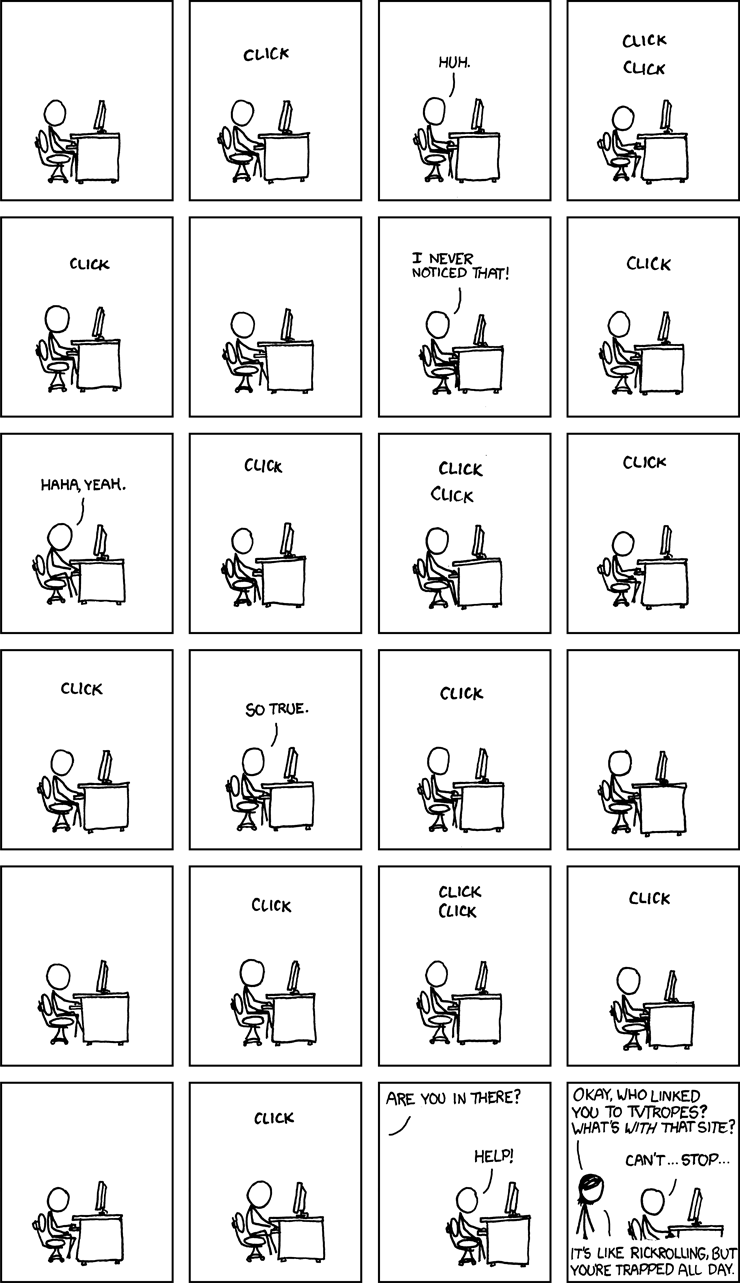
There's a world of difference. The online version is hyperlinked (in fact, its one of those charmingly old-fashioned sites, relying on plain html - the kind you hardly see any more) - and is extremely distracting, because you tend to go down - not a rabbit hole, but an absolute warren.
(Obligatory XKCD)
Reading the chapter in the book is very different - because you go through the narrative, pausing only to underline and mark stuff to look up later.

Nebeneinander Nacheinander

I'm wondering why I'm doing this. I am a literary snob, but an inverse snob. Given a choice between Edgar Wallace and David Foster Wallace, I will always go for the Feathered Serpents, the cabal of Just Men, and Mr Reeder with his rolled up umbrella. I would rather read Agatha Christie than Virginia Woolf, Lawrence Sanders than DH Lawrence, PG Wodehouse and Dashiell Hammett over everybody else.

So why am I trying to read Joyce? He's famously literary, loved by critics, very much part of the canon. And a modernist. And I wonder - is it some kind of snobbery that makes me want to read it?

I wasn't so close-minded before. When I was in college, I read reasonably omnivorously. Reveled in Stephen King and Tolkien and Conan Doyle, but also read the Castle and the Trial. We read Chaim Potok and Bernard Malamud and Scott Fitzgerald and Hemingway (I can still hear Macho repeating the name 'Potok' with childish glee). I remember getting into TS Eliot after listening to Highway 61 Revisited, and from there, via Christopher Ricks to Howl and Moloch.

Somehow - maybe as a result of the serious readers I met in later in real life - I closed myself off. I stuck to pulp and crime, genre fiction and comic books - a luxury for someone growing up in pre-liberalization India, where the superhero stories you read came in comics published by Chandamama.

As I wrote earlier, maybe reading Joyce would be like playing Dark Souls, where the sheer brutality of the gameplay kept you from the payoffs of mastering enemies and their moves, figuring out attack patterns of the bosses - to that final feeling of achievement you got when Gwynn (or Gehrman in Bloodborne) finally collapses and the achievement dings on the top of your screen.

This diffidence I feel about Ulysses, this fear of my own pretentiousness, also makes me question my own enjoyment of the book. It took me a lot of listening to classical music before finding pieces that I liked - the choral was probably the easiest to like, but going from there to the Goldberg variations or the Nocturnes or Mahler's 9th took me a long time - and these are pieces generally understood to be much more accessible than - oh I don't know - a Stravinsky. And when I'm reading, something at the back of my mind wonders "Am I trying to acquire a taste?"

And I suppose the answer is - "If you're enjoying it, go for it".

And I am enjoying it. Not in the way I enjoy Hammett, where the terse prose rushes me through tales of greed and violence; not in the way I enjoy Pratchett, where he makes me grin - just before he makes me think; not in the way I enjoy Wodehouse, where laughter is the effect of sheer, effortless mastery of the language. Reading Joyce (with references) is like reading a solved cryptic puzzle, and you see the kind of effort that went in only when you understand how the clues fit in.

Nebeneinander Nacheinander

I'll probably write more about Proteus, but at the end of it - I came away with an impression of having read something beautiful.  And the words Nebeneinander Nacheinander are a part of that. The words are a reference to Gotthold Lessing's Laocoon: On the Limits of Painting and Poetry. "[Lessing’s Laokoon distinguishes] between poetry, which deals with objects one after another in time (nacheinander…), and sculpture and painting, which deal with objects next to one another in space (nebeneinander)"

Space and time.
Close up and long shot
Cross-section and time series
Stop and go
Balance sheet and P&L

Nebeneinander and Nacheinander.
It's become a mindworm, a thought-equivalent of a earworm, and now I'm trying, like Stephen, to shoehorn every duality into these two words.

The other thing about Proteus, especially with Stephen on the beach,  is that this is so close to my experiences of being stoned. There's an appreciation of the world around, thoughts like an explosion of stars in the firmament of the mind - but one following the other. (Nebeneinander, Nacheinander). There's the sudden paranoia at the sudden appearance of the dog - the live one - the distant interest in its activities, and the spiraling back to dead mother, unknown woman and daydream of desire, a flash to the sensuous, of breeze on the face, remembered quotations (Full fathom five thy father lies - which sent me on to Eliot who used "Those are pearls that were his eyes, and from there to Hitchcock, whose Rich and Strange I saw in the British Council oh so long ago)

Since this isn't a book in the conventional sense - I don't think I will go to the next chapter just yet.
I'll read Proteus again.


Saturday, 22 February 2020

Fields of Gold

There are five railway stations in the Kolar Gold Fields: Marikuppam, Champion, Oorgaum, Coromandel and BEML Nagar. If you include the trains from nearest big junction, Bangarpet, there are 25 trains to the state capital every day. The first train starts well before dawn – but is crowded, crowded with all the young people of Kolar commuting to Bengaluru to work.

On the face of it, KGF looks like any other small town in India – but then you notice that there are very few cars on the roads. It’s all either two-wheelers or autos. The people on the roads are mostly students – or women with children. “What do you expect? All our young people are in Bangalore, working as housemaids or security guards. There are no jobs here,” says G Jayakumar, the coordinator of the BGML Employees, Supervisors and Officers United Forum.

A Town of Memories

Sixteen years ago, last week, the company at the heart of India’s most famous – and fabled - company town shut down. Bharat Gold Mines Limited, the public sector enterprise that operated and managed the Kolar Gold Fields, was one of the most visible casualties of liberalization, when the recommendation made by the Board of Industrial and Financial Reconstruction to wind down the company was accepted by the central government. When the company shut down, it had 3,100 workers, down from 35,000 employees during its heyday in the 1960s.

“The population of KGF is around 2.4 lakh. That’s more than that of Kolar, the district capital. Even though KGF is not even a taluk, we have a separate superintendent of police and a separate district surgeon,” says R Vikramadithan, former chairman of the KGF Urban Development Authority. “This was one of the first places in India to get electricity – in 1902, from Shivasamudram, before even Bengaluru. KGF had the largest hospital in Old Mysore, the BGML Hospital, a three hundred bed hospital, built way back in 1880. Now, we can’t even compete with Kuppam, which Chandrababu Naidu is developing at a record pace,” he says.

Ghosts of the Past

Scattered around KGF are the shafts – marked by rusted metal platforms, around two storeys high. They still bear British names – Bullen, Champion, Edgar and so on. But with the Brits long gone, the names have become Indianized.  Hancock’s shaft is now ‘Uncox’s’, Rodgers camp is now Rajesh camp.

Next to the Hancock’s shaft is a building that looks like a cathedral – it’s actually housing for an aircompresser, feeding power to the cart that took the miners down – 3,200 feet below the surface. The cart is rusted solid now, and the sheds nearby are falling apart. “This is where the agents would sit. This is where the explosives were the explosives were stored. The mines clerk would have a key, the officer would have another. Both of them had to unlock the stores at the same time to access the gelatine and the ANFO,” says 64-year old Francis Peter.

Peter used to be a detective, guarding against gold thieves among the miners. He and his crew would navigate the miles of tunnels under the surface, with just a single torch to guide them through the darkness. The idea was to conduct surprise checks on the miners – who had their own ways of communicating to each other that checks were on the way. But now, those gold thefts seem minor. “They looted this place – those so-called-officers who were supposed to be looking out for us,” he says. “Everything that could be moved, they stole, from the machinery to the copper wire that connected the compressor to the shafts.” He spits in disgust.

Gayatri Chandrashekar, the author of Grit and Gold, a history of KGF, says “The very people who were supposed to guard the resources of BGML were the criminals,” she says.   

The next generation     

There are around 140 students in the Government Higher Primary School in lower Maskam. “These are children from the poorest families. We have a few students from the local remand home for children as well,” says Nagaraja Rao, the school’s principal. For the children here, the mines are irrelevant, the stuff of stories their grandparents tell. They aren’t living in the past, but immediately, vitally, in the present.  Take 14 year-old Clinton (It seems like the Big Dog has taken over from JFK as the US president people name their kids after these days). He’s tall, dark, and taciturn. He wants to quit school when he’s 16 and go to Bengaluru and become a dancer and dance teacher. He’s already discussed this and got the approval of his father, John, an auto driver. There are the brothers Ameenu, Siddique, and Saleem. Their father Fairoz is also an auto driver. Siddique wants to become a car mechanic when he grows up. When Ameenu, the eldest, prompts him, asking if he doesn’t mean a mechanical engineer, Siddique shakes his head. Not an engineer, but a car mechanic. He’s quite emphatic. Saleem, the youngest, has the grandest plans. He wants to be a collector.  As for Ameenu, he wants to be an engineer. “He’s smart enough, he can do it if he studies,” says his teacher Varalakshmi, smiling with pride. There’s Charulatha, a gangling girl of 12. Her father works in a local garment store. She wants to become a cop when she grows up.

There’s Ramesha. He ran away from home when he was nine, unable to take the constant beatings his parents dealt out. Now, he’s at the remand home, where he’s happier. He doesn’t ever want to go back home. There’s little Vidya, nine years old, very shy, and heartbreakingly pretty, with her left hand horrifically withered and burnt after an accident with hot tar. She’s another remand school resident as well. Her parents left her there, unable to take care of her. Like Ramesha, she’s happier there. They give her breakfast and dinner there, and the school provides her lunch. She gets 3 sets of school uniform clothes. Life is better at the remand home, she says.

Despite the poverty, despite the hardships, these children are bright and inquisitive. They live in a world without Instagram and Snapchat, in a world where books and play still matter. They aren’t blasé or jaded and retain the sense of wonder that’s one of the most magical things about childhood. “They’re all good kids,” says Indumathi, another teacher. “Of them, we hope that at least 50% will go on to college. We can only help them up 4:30 pm, while they’re here in school. After that, when they go home, they’re on their own,” she says.

Open and shut

Every once in a while, news of new developments in the myriad of court cases surrounding BGML sweeps through KGF.  Or it’s talks of the mines being reopened. But this week, there’s been a significant development. “We have now got the penal interest on the delayed gratuity payments for the miners,” says Jayakumar.

According to Jayakumar, its more viable to get the gold from the so-called “tailings”, the cyanide salt dumps that dot the landscape around KGF.  “We are ready to do what is needful to revive mining in this area. But there are vested interests who have been working against the workers – while pretending to speak for them,” he says.

Jayakumar has been fighting for the miners in the courts, as well as representing their issues to the government for years now. For him, the next target is getting compensation for the miners’ lung infections. The miners call it silicosis, and it’s a result of inhaling the crystalline dust from the mines.  “1,500 people have died as a result of BGML’s neglect,” he says. Now we are going to the Supreme Court. Prashant Bhushan is representing us.”

But as far as the revival of mining is concerned, KGF seems to be the ball in a ping-pong game between the Centre and the state. “The Central Government has said that it is OK with the idea of the Karnataka government taking over and running these mines. But the Karnataka government does not want to take on the 1,700 crores of BGML’s liabilities,” says Jayakumar.

A long, slow decline

Over the past seven decades, the story of Kolar has been one of departures. First, after Independence, the British officers left. “The Company now began to entrust more responsibilities to the Anglo-Indians. Other educated Indian Officers and Agents joined the Mining Company at this stage and they took over many Administrative and Managerial posts when the European exodus began,” says Bridget White Kumar, a long-time Kolar resident who now lives in Bengaluru. But the Anglo Indians too found themselves considering other options. “Towards the beginning of the 1960’s till the end of the 70’s there was a mass exodus of the community from KGF to England, Australia, America and Canada,” she says.

In 1956, John Taylor and Sons, the company that was instrumental to the development of the Kolar Gold Fields handed over charge to the State of Mysore. Fourteen years later, in April 1970, the firm closed down.  

Today, most of the BGML officers have gone, too. A few remain, dreaming dreams of reopened mines and gold from sand. The old workers remain, too, hoping for compensation and payments that may never come. The younger generation has abandoned hope of work in KGF, preferring gruelling commutes on crowded trains to Bengaluru every day. And with talk of the privatization of BGML, the last big employer in the area, it looks like Kolar is set for another exodus. 

Tuesday, 18 February 2020

Reading Ulysses - Nestor

My Ulysses Read - 2
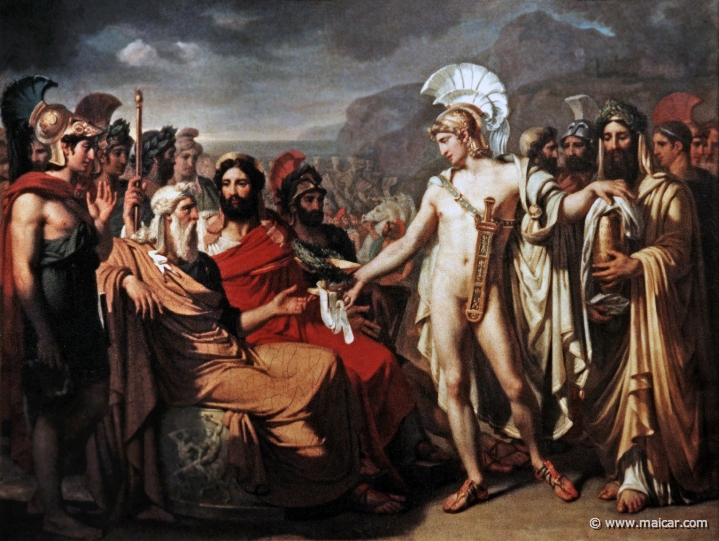
Ah Nestor. The old windbag. Full of unheeded advice and stories of past glories. General tool, who is respectfully listened to and ignored, the general who needs to be rescued from the battlefield. (At least, that's Nestor in the Iliad. In the Odyssey, Nestor is a different person entirely. Courteous, devout and a good host, who takes in Mentor and Telemachus, and points them to the direction of Menelaus.
The parallel of Mr Deasy is more in keeping with the Nestor of the Iliad than of the Odyssey.  Deasy is a Tory, an old man who rattles on about Ireland's history and writes letters to the papers about Foot and Mouth disease. He pays Stephen, but rubs in the fact that Stephen owes money to lots of people.
The theme for this chapter is "catechism" according to Gilbert, and "Wisdom of the ancients" according to Linati.

Here are the schema entries:
Gilbert
TitleSceneHourOrganColourSymbolArtTechnic
NestorThe School10am-BrownHorseHistoryCatechism (personal)
Linati
Nestor9 — 10 a.m.Brown HistoryThe wisdom of the ancients
And the chapter begins with a catechism - a Q & A session, call & response, call it what you will. And its history, about Tarentum, and Pyrrhus, the man who gave us the Pyrrhic victory. I wonder if that's supposed to mean something - in the context of the Irish struggle against Britain, or in a more personal context - that every victory we win is never worth the cost of the battle?

"Thought is the thought of thought".
OK. What does that mean? It's not like a "Rose is a rose is a rose", it's something that sounds good, but again, very "pale parabola of joy"-ish. But it can lead to thought being the enemy of action, another misquoted line - but one which came much later.

I kind of get Stephen here, looking at a bunch of rich kids, their futures already made because of their parents, while he grapples with the absence of his mother. I get the routine of unprepared lessons, of a job indifferently done. 
And I get Mr Deasy - there are so many Deasys in my own family - or atleast there were. Dead now, most of them. Conservatives, staggeringly hypocritical, parsimonious, and proud of it. Full of advice and opinion, and yes, catechisms, in their own way.
— Because you don't save, Mr Deasy said, pointing his finger. You don't know yet what money is. Money is power. When you have lived as long as I have. I know, I know. If youth but knew. But what does Shakespeare say? Put but money in thy purse.

— Iago, Stephen murmured.

He lifted his gaze from the idle shells to the old man's stare.

— He knew what money was, Mr Deasy said. He made money. A poet, yes, but an Englishman too. Do you know what is the pride of the English? Do you know what is the proudest word you will ever hear from an Englishman's mouth?

The seas' ruler. His seacold eyes looked on the empty bay: history is to blame: on me and on my words, unhating.

— That on his empire, Stephen said, the sun never sets.

— Ba! Mr Deasy cried. That's not English. A French Celt said that. He tapped his savingsbox against his thumbnail.

— I will tell you, he said solemnly, what is his proudest boast. I paid my way.
The first thing I wanted to know was: "Who was the French Celt?" But unfortunately, that seems to be a red herring.  Scottish author, John Wilson, writing as "Christopher North" in Blackwood's Magazine in 1829, is sometimes credited as originating the usage. But Wikipedia has a whole page on the possible origins of this phrase, and the various empire it referred to, dating all the way back to the Bible.

The other thing that struck me was the "Iago" quote. My grandfather was full of quotes from Shakespeare - not from any reading of the plays, but half remembered scraps from a book of quotations.

But this made me wonder, yet again, about context. Is a quote automatically suspect - and untrue - because it came from Iago? That in context, it was malicious? What about the meaning you take away from it? Does a quote become less true if someone repellent said it.

There's this bit, which could easily make it to a thousand greeting card platitudes, inspirational Twitter and political campaigns:

"And I can fight only for something that I love, love only what I respect, and respect only what I at least know"

It sounds perfectly sensible and logical. Does it become automatically suspect because it was said by Adolf Hitler?

Anyway, that's another track altogether.

Returning to Nestor and the schema, Sargent, the ugly, mathematically-challenged student, I suppose, is Pisistratus (though he isn't Nestor's son).  Who then is Helen?
But overall, an interesting chapter. There's a ton of references I don't get, but I like this kind of reading. Kind of takes me back to the days - pre-internet days - when I discovered TS Eliot, and was trying to figure out the lines, using the annotations.