Wednesday, 21 April 2021

Quiz

  1. Savile Row for tailors, Lincoln’s Inn Fields for lawyers, Harley Street for doctors. Hatton Garden for whom?
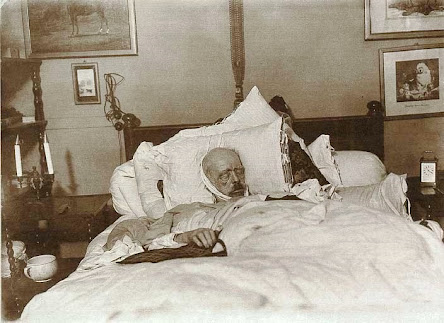
  2. On June 30, 1898, Willy Wilcke and Max Christian Priester climbed on to the window sill of this man’s residence and took this photo. The house owner had been dead for a few hours, and the two changed the time on the bedside clock to show that the photo had been taken at the time of death. When they attempted to sell this photo, they were arrested, and the picture was finally released to the public only in 1952. Who was the statesman who was the subject of the photo.
  3. This festival has been called Beltane, or alternatively, Bealtaine, Bealltainn or Boaldyn. It celebrates summer, and traditionally, two huge bonfires are lit in fields. Cattle are driven through these bonfires to protect them from disease. The dew gathered on the morning of Beltane is supposed to have magical powers, and increase sexual attractiveness. Beltane falls on another, more secular, holiday. When is Beltane celebrated.
  4. In 2004, it was Tropic Brilliance. In 2006, it was Okal King Dor. In 2017, it was OOCL Japan. What is it in 2021?
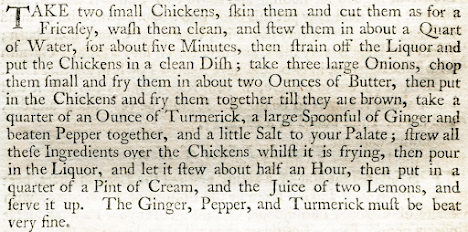
  5. What is special about this extract from Hannah Glasse’s The Art of Cookery Made Plain and Easy, first published in 1747?
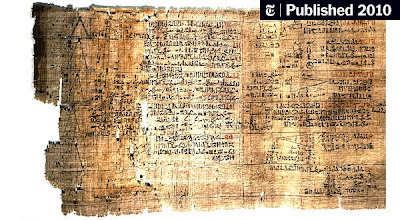
  6. In late 1858 - or early 1859, Alexander Rhind, a Scotsman living in Egypt, purchased a manuscript, a papyrus 18 feet long and 13 inches wide. The papyrus, titled “Accurate Rendering, The Entrance into the Knowledge of All Existing Things and All Obscure Secrets” , was believed to date back to 1650 BC. It was a copy of another work, which was written 200 years earlier. The Rhind manuscript, as it was called, was the earliest discovered object of its kind. What was it?
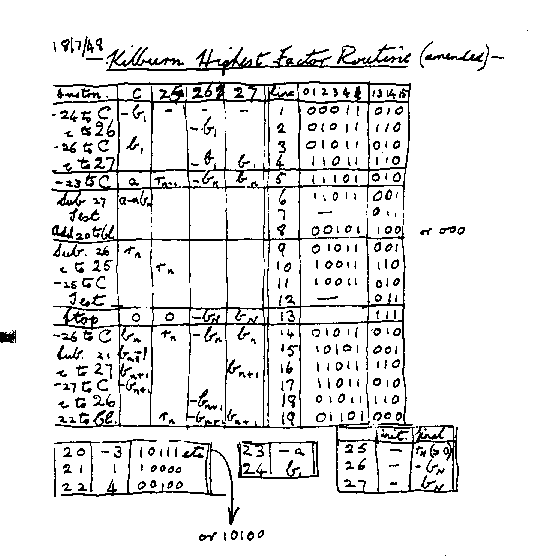
  7. In 1948, the British engineer Tom Kilburn led the work on designing and building a Small Scale Experimental Machine, "The Baby". This tested in practice the ability of the Williams-Kilburn Tube to read and reset at speed random bits of information, while preserving a bit's value indefinitely between resettings. And for the first time in the world a computer was built that could hold any (small!) user program in electronic storage and process it at electronic speeds. He wrote the first program for it, which first worked on June 21st 1948. What did the program do?
  8. This is a painting of the actress Ornella Muti, created by an AI after studying the works of a famous painter. Who was the painter?
  9. What connects the following locations in the US:  Orange County, New York City, Atlanta, New Jersey, D.C., Beverly Hills, Miami, Potomac, Dallas, and Salt Lake City?
  10. Bel-Shalti-Nanna (or Nannor) was a Babylonian priestess of Sin (Sin being the god of the moon), who lived in the 6th century BC. She was a pioneer, and is generally accepted to be the first person to have done something. What was Bel-Shalti-Nanna credited with doing?
Answers

  1. Jewellers
  2. Otto Von Bismarck
  3. May 1, May Day
  4. Evergiven.  These were all ships that blocked the Suez Canal
  5. The first published  English recipe for an "Indian Curry" 
  6. Mathematics textbook
  7. Calculating HCF (Highest Common Factor or Greatest Common Divisor (GCD))
  8. Raphael
  9. Locations for the Real Housewives TV show
  10. Creating the first museum


Tuesday, 19 January 2021

Sound and Games


Dear Pingle,
While I spend a lot of time playing games, I may not be the best person to talk of video game music. But what I can do is talk about a few gaming experiences I have had where the music made a significant difference to my gameplay experience.
Also, a lot of this is context driven. So sometimes the music may sound strange in isolation. Where you are in the game also adds to the effect the music has on the gameplay
1. From 1996.Quake 1. The Necropolis. Nine Inch Nails
You're a lone soldier in an overrun military base. The teleportation tech that the government has been experimenting with has been compromised. You have to make your way through dimensional slipgates into strange environments full of monsters, and stay alive until you can deal with the malign brain behind it all. This is early on in the game, a water-filled level called the Necropolis.


2. From 1999. Baldur's Gate OST. Night on the Plains. Michael Hoenig
You've just turned 18. All your life, you have lived in the cloistered library city of Candlekeep. One day, your foster father comes to you in a state of panic, telling you that you are in terrible danger, and the two of you need to leave Candlekeep and find shelter elsewhere. You leave Candlekeep, but on the way, you are accosted by a sinister figure in armour, and his ogre bodyguards. Your foster father dies defending you, but you manage to escape. It is your first night in the wilderness. There are wolves. And there is a murderer looking for you, and night falls.


3. 1999 again. Planescape Torment OST: Vhailor. (A year before Memento was released) Mark Morgan
You wake up in a mortuary. You have been killed again. You have no memory of who you are, but your body is full of cryptic tattooed instructions about what you should do once you recover from your latest death. And slowly, you start to figure out who you are, and why you cannot die. Along the way you pick up a group of companions - each accursed in their own way, each one tormented. And one of them is Vhailor, a member of the group of Mercykillers, a sect dedicated to bringing justice. And when he finds out about the magnitude of your crimes, there is a reckoning
.

4. 2000. Icewind Dale.  Kuldahar. Jeremy Soule
Up in the frozen North, in the spine of the world, where the air freezes in your lungs, there is a village called Kuldahar which nestles in the shelter of an ancient lifegiving oak tree. The tree is vast, and radiates a field of warmth. The village and the tree share a symbiotic relationship, making the place a welcome one for the weary and cold traveller. This was the first time I'd heard of Jeremy Soule, one of videogame music's most prolific composers.

5. 2003. Knights of the Old Republic. Manaan. Jeremy Soule.
In the Star Wars galaxy, the planet Manaan, for millenia, was the only source of kolto, a rare and valuable medicinal substance. Manaan was home to the aquatic species Selkath, who remained neutral in conflicts between the Jedi and the Sith. Kolto itself was believed to be produced by an ancient Giant Firaxian Shark called the progenitor - who holds one piece of a larger puzzle you need to solve to find what the Sith Lord Darth Malak plans to do in his war against the old Republic.
Ahto city is the only spaceport - and surface city - on Manaan.


6. 2006. The Elder Scrolls: Oblivion. Jeremy Soule. 
This one is very personal. I bought my first console - an XBox 360 - in Mustapha's in Singapore. I bought 3 games with it. One of them was Oblivion. When I got home and plugged it in, this was the first game I played. While it may look dated today, it was mindblowing then, especially when you finish the prologue and escape from prison and step out into a wide new world. Oh, and the opening narration was by Patrick Stewart, and it had Sean Bean as your companion. He dies, of course.
 (I played this to Hari once. He was quite bewildered, and tried hard to be polite)


7. 2007. Mass Effect. Vigil. Jack Wall
Another personal favourite. I've been Commander Shepard, oh, for thousands of hours, across three games. Mass Effect is a space opera, and you are pitted against extra-terrestrial eldritch abominations intent on destroying sentient life. But the greatest part of the game is not the combat. It's about the people - both human and alien - that you meet, and how you choose to save the galazy. And this piece - the opening music - so full of longing - absolutely captures a moment in the game where you meet a remnant of a long dead species.


8. 2010. Bioshock 2. 10 cents a dance. Ruth Etting
It's not original music that makes a game all the time. Bioshock 2 was nowehere as good as its predecessor., which had one of the greatest gut-punches in gaming. But this piece has stayed in my memory, and for good reason. It's played during a loading screen, and on a gramaphone, in-game.


9. 2010. Mass Effect 2. Suicide Mission. Jack Wall.
Mass Effect 2 is quite simply, one of the best games ever made. Think of it as a dirty dozen in space - where you have to be friend, philosopher and guide to a ragtag bunch of misfits - and travel into deep space to blow up a space station - a suicide mission if there ever was one. ANd if you have done the right things - talked to you teammates, understood what they were good at, helped them with their problems, researched alien tech, upgraded your ship, no one will die in the final mission. And your reward is the look of respect you get from your teammates as you walk through the ship afterwards. 


10. 2011. Dark Souls. Ornstein and Smough. Motoi Sakuraba.
It's probably the most famous boss fight in gaming. You enter this massive, pillared hall. At the other end is a balcony, and on it is an armoured figure - Dragon-slayer Ornstein. He looks at you, and raises his spear. Lightning crackles along it. He jumps down. And behind him, another figure rises, a huge man who dwarfs the 8 foot tall Ornstein. Smough carries a ridiculously large hammer, but on him, it's the right size You hold your breath, and before you let it go, Ornstein has charged across the room and you are wriggling at the end of his spear.
One of the most popular comments on the video is "So this is how it sounds like after 10 seconds...". Because that's how long you last in this legendarily difficult battle.


Monday, 18 May 2020

Once upon a summer, 1985

There were three buses from Nungambakkam to Mount Road: 25, 25B and 17c. On every day of the week in the summer of 1985 (except on Mondays), I would be standing at the Nungambakkam Police Station bus stand, at about a quarter past ten. The journey from there to the TVS stop wasn't long, but buses weren't always reliable, and it would be a little before eleven that I would find myself waiting, along with several others, on the stairs of the British Council, waiting for the library to open.


This was a Madras summer, and it was a physical thing. The air was like hot syrup, and your shirt would stick to your back as you waited, and when the doors finally opened, you would walk into the blessed coolness of air-conditioning. For me, that summer, it was heaven.


Library membership cost Rs 80  a year, and you could borrow up to four books at a time. Cards were issued by a slender, distinguished-looking woman with short, iron-grey hair with improbably beautiful diction.


There were books I borrowed from there, of course. There were Wodehouses,  pretty much the entire set - but you could seldom find them on the shelves, as people would ransack the carts the library staff used to take returns to their proper locations. So you had to reserve them, which meant looking up the card catalogue, finding the proper number and filling out a form, and later you would get a postcard when the books were available, telling you to pick them up within so many days. I remember making a reservation for Bill the Conqueror, and being delighted when the postcard finally came - and being ultimately disappointed, as the book wasn't as good as many of Plum's best. There were the Orwells, and for some reason, I never read his novels. I consumed his essays, though, fascinated, even then, by the depth of his perception and the clarity of his language and worldview.


But it wasn't for those books that I was at the library for. It was for the part of the library which housed a few TV sets, and you could get one of the staff to load up a David Attenborough documentary, and marvel at the glories of the planet. Or it could be an episode of Fawlty Towers, or some other show, and you'd realize that you were laughing only when you caught some other member's disapproving stare.


But most of all, I lived for the reference section.


It took up almost a third of the library. There were comfortable chairs all around, and the space was punctuated by shelves. There were magazines - music, mechanics, automobiles and current affairs. There were week old English newspapers that some older members would read, religiously. There were encyclopaediae on a variety of topics. And there were the film guides.


 I hadn't been very much into film at that point.  After all, the only major English films that came to Madras were James Bond thrillers, a year after release in the West. This was the time when the biggest grossing film in India - for several years - had been MacKenna's Gold. I had watched a few Bond films - the ones that had come to the theatres, and loved them. And of course, I'd watched Raiders of the Lost Ark.


I think that I pulled out a film guide to see if there were other films she had acted in.  This being the British Council, you wouldn't find Maltin's guide - which was available in the bookshops. But I'm pretty sure that what I initially looked through was some run of the mill film guide.


I'm not sure when I first came across Leslie Halliwell's guide. But it was unlike any of the others. Dense, without pictures - imagine a film guide without a single still, it seemed heavy going.  And there was the severity of judgment. Pages and pages of films without a star rating. I looked up Raiders of the Lost Ark.

Two stars.

Two Stars.

It was one of the  greatest movies I'd seen, and all it got was two stars?

I looked at the Bonds.

The Spy Who Loved Me?  No stars.

What???

So who was this guy? Some arty type who only rated Oscar movies?

I checked Gandhi - which had won the Oscar recently, to front page coverage in every Indian newspaper.

Three stars.

Not expecting very much, I looked up From Russia, with Love.

Three stars, the same as Gandhi.

Description: "Arrant nonsense with tongue in cheek, on a big budget"


Every day after that, except on Mondays, when the library was closed, you'd find me there, deep in Halliwell's Film Guide, 4th edition, and later the 5th. Sometimes, someone would be sitting in my favourite chair, and I would glare and glare, and reclaim it at the first opportunity. Somedays, I would go with a notebook, and make list of films that I would see, when I got the chance.


And when I was sated with reading about old films, and Hollywood's golden age, I would leaf through magazines. Or watch a show.


And soon, it would be evening, and I would reluctantly close the guide, and head back to the bus stop, wondering if I would ever be able to see all the films that I wanted to. And as the bus made its way to Nungambakkam, I would slowly emerge from a world black and white and colour, where Errol Flynn would battle Basil Rathbone on the stairs of Nottingham castle and Bogey would have one more drink and Cary Grant and Rosalind Russell would scheme and manipulate each other and every one else, into a world of public exams and IIT preparation and all the rest, far away though it seemed at the time.

Monday, 6 April 2020

Guilty Pleasures: James Hilton

The first James Hilton I read was Lost Horizon. It was one of those books that I had heard about, but I don't know where I heard about it. I found it in Eswari Lending Library, that Aladdin's cave of books in Lloyd's Road, back in the early 80s. I remember the cover too - lurid yellow, with an extremely Oriental woman and and leering man in the background - this one.
I remember liking it very much. The only other book by Hilton in the library was Goodbye Mr Chips, which I devoured. After all, I had just passed the age of reading about boarding school antics, from Malory Towers to Greyfriars and found the lifestyle fascinating (though a common threat for bad behaviour from my mother was that she would put me in a hostel if I didn't behave any better).
I don't quite remember when I first read Random Harvest, but I'm quite sure this was after I became interested in the Golden Age of Hollywood. Halliwell had given it three stars, and the movie itself was hokum, but sincerely done, with a magnificent cast.

It was only later that I really read it, and I found I enjoyed it very much.
Charles Rainier is an industrialist and a Conservative MP, to all intents and purposes, a very successful man, with a lovely wife who is also an accomplished hostess. But there's something that he's missing, an emptiness that he has been trying to fill in his life.
We learn that there is a gap in his memory, a period of three years he remembers nothing about, three years that took place after he was wounded in the great war, and then he woke up in 1920, recovering from an automobile accident, with no memory of what happened to him, from 1917 to the moment he regains consciousness from the accident.
The story is about how he tries to to recover those memories, but its also about the period between the two world wars. Chronologically, the story begins with Armistice Day, 1917, and ends on September 1, 1939, and the picture it draws of England between the wars is fascinating.
Rainier is upper middle-class, and after rejoining his large family, decides to go to Cambridge - something he thoroughly enjoys, but he gives it up to take control of the family businesses.
It's a portrayal of the English upper classes that's a great deal more affectionate than, say Waugh, even though there are characters who could move seamlessly between the two worlds.
Jill could afford once more her cruises and flirtations, with no handicaps to the latter except advancing middle age and none to the former save an increasing difficulty in finding new places to cruise to. Julia and her husband lived in Cheltenham, playing golf and breeding Sealyhams; George and Vera preferred town life and had taken a newly built maisonnette in Hampstead. Julian was at Cannes, doing nothing in particular with his usual slightly sinister elegance; once or twice a year he turned up in London, took Charles for lunch to the Reform Club, and worked off a few well-polished epigrams. Bridget had married an officer in an Irish regiment and lived in a suburb of Belfast. She had had one child, a boy, and was expecting another. With George's girl and Julia's boy and girl, this made a problematical five as against seven of the previous generation, unless (as Chet put it) Charles hurried up. They were not, however, at all anxious for Charles to hurry up; and as both Lydia and Jill were past the age when any amount of hurry might be expected to yield result, and as Vera was sickly and Julia (so she boasted) had nothing to do with her husband any more, the ratio really depended on Bridget—plus, of course, an outside chance from Charles. Nobody even considered Julian in such a connection.
Hilton's prose is simple - and surprisingly economical. It doesn't thrust itself forward, but with a couple of sentences, he establishes the characters of Charles' family, individually and as a unit.

There's also the Al Stewart aspect - who I kept thinking of as I read the novel. Many of Stewart's songs - Post World War II Blues, A League of Notions, Trains - all take you through periods of history, painting pictures with a few words, and deceptively muzak-sounding music, until you realize that there's a considerable amount of artistry behind it. It's much the same way with Hilton. And this is about an England between 1917 and 1939.  The very next paragraph to the one above switches from the personal to the political.
Much more, though, had happened between 1921 and 1924. The ancient Irish problem had apparently been settled; a conference at Washington had arranged limitation of naval armaments between England, Japan, France, and the United States; someone had almost climbed Everest; the German mark had collapsed and French troops had entered the Ruhr; Mussolini was rebuilding Italy and had already bombarded Corfu; there had been an earthquake in Japan, there had almost been another war with Turkey, there was still a war in Morocco, and there was going to be an exhibition at Wembley.
And through it all is Charles Rainier, a decent man, but also, like so many of Hilton's heroes, curiously passive. Not to suggest that he isn't capable of action, quite the contrary, but it is disinterested action - a very Bhagavad Gita kind of action. He's as much observer as doer.
Hilton was a bestselling author in his time, and many of his books were filmed. And one of the greatest advantages he had were the actors who portrayed his heroes were definitive examples of decent, gentle Englishmen - Robert Donat in Knight without Armour and Goodbye Mr Chips, and Ronald Colman in Lost Horizon and Harvest. And their performances do so much to cement the idea of the decency of heroes.
Donat and Dietrich in Knight Without Armour

Colman as Rainier and Garson as Paula Ridgeway in Random Harvest

Nineteen twenty-five was another improving year, the year of Locarno, the false dawn. It was a year perhaps typical of the twenties in its wishful optimism backed by no growth of overtaking realism; another sixpence off the income tax, another attempt to harness a vague shape of things to come with the even vaguer shapes of things that had been. For the public would not yet look squarely into that evil face (publishers were still refusing "war books") and few also were those who feared the spectre might return. The England hoped for by the majority of Englishmen was a harking back to certain frugalities of the past (lower and lower income tax, smaller and smaller government expenditure) in order to enjoy more and more the pleasures of the present; the Europe they dreamed of was a continent in which everybody placidly "saw reason," while cultivating summer schools, youth hostels, and peasant-costume festivals in the best tradition of Hampstead Garden Suburb; in exchange for which the City would make loans, trade would thus be encouraged, and taxes fall still further. Mixed up with this almost mystic materialism was the eager, frightened idealism of the Labour Party (both the eagerness and the fright came to a head a year later, in the General Strike); the spread of the belief that the League of Nations never would be much good but was probably better than nothing, a belief that effectively converted Geneva into a bore and anyone who talked too much about it into a nuisance. Meanwhile a vast and paralysing absence of hostility gripped Englishmen from top to bottom of the social scale, not a toleration on principle but a muteness through indifference; they were not AGAINST the League of Nations, they were not AGAINST Russia, they were not AGAINST disarmament, or the Treaty of Versailles, or the revision of the Treaty of Versailles, or the working classes, or Mussolini—who had, after all, made the Italian trains run on time. "

I've called Hilton a "guilty pleasure", and I have often wondered why. I've read worse writers with pleasure and have made no bones about it. I sincerely believe that guilty pleasures are signs of snobbery (not that I'm immune to snobbery myself, but I try to guard against it myself ). But sometimes I feel embarassed that I like Hilton. Maybe it's because of the exaltation of a certain kind of Englishman, a certain kind of Englishness - which as an Indian, I instinctively distrust.
Consider this bit.
The very absence of all these things was English, Rainier said—something offhand but good-humoured, free but obedient, careless but never heartless.
"But tell that," he added, "to the Indians in Amritsar, to the Chinese who read the notice in a Shanghai park, 'No Dogs or Chinese Allowed,' to the tribesmen in Irak, to the peasant in County Cork, to the..." But then he laughed. "God, how we're hated! It isn't so much because we really deserve it. Even at the bottom of the charge-sheet I could quote Santayana's remark that the world never had sweeter masters. SWEET—a curious adjective —and yet there IS a sweetness in the English character, something that's almost perfect when it's just ripe—like an apple out of an English orchard. No, we're not hated altogether by logic. It's more because the world is TIRED of us—BORED with us—sickened by a taste that to some already seems oversweet and hypocritical, to others sour and stale. I suppose the world grew tired of the Romans like that, till at last the barbarians were excused for barbarism more readily than the Caesars were forgiven for being tough. There come such moments in the lives of nations, as of persons, when they just can't do anything right, and the world turns on them with the awful ferocity of a first-night audience rejecting, not so much a play it doesn't want, as a playwright it doesn't want any more... But wait till they've experienced the supplanters—if we are supplanted. A time may come when a cowed and brutalized world may look back on the period of English domination as one of the golden ages of history..."
Naturally, as someone from one of England's former colonies, this irritates me.
But then, the India I live is the India of Delhi in 1984, of Gujarat in 2002 and Delhi in 2020.

"But wait till they've experienced the supplanters—if we are supplanted. A time may come when a cowed and brutalized world may look back on the period of English domination as one of the golden ages of history..."

And I wonder.

Thursday, 19 March 2020

The Nameless King

As part of my "self-isolation", I've been doing three things: gaming, reading and writing; in that order. The ratio would probably be 80:15:5.
And over the course of four days last week, I've played a certain section of a game over and over and over.
The game is Dark Souls III. If you're into games at all, you know what I'm talking about. If you aren't, well, it's a fiendishly hard game. But, it's also fair. It requires, atleast in the initial playthroughs, a lot of caution, and a lot of dying.
 
This is a Filk song for the game. And it captures it quite well

Souls games begin with you waking up undead, and navigating a short tutorial section, before you face a boss enemy - to whom you will die a few times, before making your way to the game's hub area.
From there, you go on, looking for the MacGuffins - bells to ring, items to collect, and at the end of each area is a boss - usually a punishingly hard boss. And you die, and you run the "gauntlet of misery" back to the boss, until you manage to survive the encounter.

I spent four days - around twenty hours - just fighting one of them.

In the game's mythos, he is the exiled son of the thunderbolt wielding prime deity. This world survives because of the first flame, which provides heat and light, and keeps darkness at bay. And in the beginning, Gwynn, the God of Thunder defeated the primordial dragons, but his eldest son, and the Gods' greatest warrior, betrayed them, and joined the dragons instead. He was banished, and all records of his existence were destroyed.
He is the guy I spent all those hours fighting.
The run-up to the fight is epic in itself. The area is called Archdragon Peak, and you battle your way through vicious serpent-men who can destroy you in a couple of hits. You run past one dragon that lands in your path, weaving through ruins filled with enemies, dodging gusts of fire when you get out in the open, until you get to a point where you can strike at the dragon's weak spot. Then you toil up a mountain side face off against another dragon and another horde on enemies, until you find a safe spot next to a giant bell.
You walk up to the bell, and pull a lever. The bell tolls, and thunderclouds gather. Gather may be too mild a word - they boil around you. One moment, its a clear sunny day, the next, your standing on a vast cloud, and in the distance, a speck gets bigger and bigger - until you see that its a massive dragon, with a man perched on it.

Then the music starts, as the dragon swoops towards you. And its rider lifts up a massive spear, crackling with lightning.

Progress in most games - be they racing or sports or FPSs - is all about pattern recognition, and how quickly you respond. It all comes down to seeing cues, and pressing the right buttons.
The build up to the boss fight - or level - is designed to teach you what you need - which cues to look for: which moves are one shots; which cues presage the beginning of a combination of obstacles/threats; which moves require instinctive responses; which cues need just that bit of delay before you respond, and so on.
But what makes the King so hard is that he has a huge variety of cues - in this case attacks. Most of them are telegraphed, but figuring out what each cue means, and how to respond to it - decisions on whether to dive away or sidestep, to dive once or multiple times, whether to move towards him or away, linearly or diagonally - have to be made instinctively. And add to this the fact that you lose sight of him when some of his rushing attacks move him behind you, and you're frantically turning around to figure out where he is, while he's lining up a devastating strike.

Dark Souls is known for its punishing bosses - a tradition that goes back to its first edition, where players encountered the formidable duo of Dragon Slayer Ornstein and Executioner Smough.  And the Nameless King is probably the hardest boss in the series - which includes the three Souls Games, Bloodborne and Sekiro.  One of the most popular comments in the video of the Ornstein and Smough fight goes something like this: "So this is how it sounds beyond 10 seconds".

Fighting the Nameless King, I felt that comment.

The first time I went in the dragon wrecked me. The the king pounded me to a pulp with his great spear. Then the dragon burnt me to a crisp.

I tried again.
I died in 10 seconds.
Again.
15 seconds.
Again.
45 seconds, and almost killed the dragon.
Again.
Dead in 5 seconds.

This went on for an hour, before I killed the dragon.

Then this happened.

 
The first time wasn't too bad. I was able to keep myself alive, and waiting for openings, would risk the odd attack. I kept chipping away at his health bar, and got it halfway down.

And then I got greedy.

And he curb-stomped me.

It took me another day for me to beat the first portion - the dragon part consistently. Even then, one wrong move, one bad reposition, and I would die.

I started getting to the second phase more consistently, but I never did as well as I did the first time around.

I think the first time, I was more open-minded - more willing to play it safe because I didn't know his patterns, more alert because I didn't know what to expect.

Later, it was all "Oh shit, he's going to do this deadly attack and I should be really far away", panicked moves, and then he would switch up his attack and eviscerate me.

Over and over again.

For three days.

I looked at videos of the battle on the internet. I tried ranged attacks. I tried tanking. The end result was the same.

"YOU DIED"

Finally, I posted a plea on reddit. One of the suggestions was that I rebuild my character for this fight.

I did that - it was a completely new playstyle, one that I wasn't accustomed to, but I felt a lot sturdier. I had been, to use TVTropes jargon, a fragile speedster/glass cannon. Now I was the mighty glacier.

It was over in 3 minutes.

When the king finally collapsed, I didn't feel much. I thought to myself, "That's done".

It was only later, when I thought back about the boss battle, that a feeling of relief seeped through me.

Now I could get on with my life.

And maybe next time, I would defeat the king as a fragile speedster. That would be the real test.

But for the whole day and the next, I really felt like this.