Showing posts with label Books. Show all posts

Monday, 18 May 2020

Once upon a summer, 1985

There were three buses from Nungambakkam to Mount Road: 25, 25B and 17c. On every day of the week in the summer of 1985 (except on Mondays), I would be standing at the Nungambakkam Police Station bus stand, at about a quarter past ten. The journey from there to the TVS stop wasn't long, but buses weren't always reliable, and it would be a little before eleven that I would find myself waiting, along with several others, on the stairs of the British Council, waiting for the library to open.


This was a Madras summer, and it was a physical thing. The air was like hot syrup, and your shirt would stick to your back as you waited, and when the doors finally opened, you would walk into the blessed coolness of air-conditioning. For me, that summer, it was heaven.


Library membership cost Rs 80  a year, and you could borrow up to four books at a time. Cards were issued by a slender, distinguished-looking woman with short, iron-grey hair with improbably beautiful diction.


There were books I borrowed from there, of course. There were Wodehouses,  pretty much the entire set - but you could seldom find them on the shelves, as people would ransack the carts the library staff used to take returns to their proper locations. So you had to reserve them, which meant looking up the card catalogue, finding the proper number and filling out a form, and later you would get a postcard when the books were available, telling you to pick them up within so many days. I remember making a reservation for Bill the Conqueror, and being delighted when the postcard finally came - and being ultimately disappointed, as the book wasn't as good as many of Plum's best. There were the Orwells, and for some reason, I never read his novels. I consumed his essays, though, fascinated, even then, by the depth of his perception and the clarity of his language and worldview.


But it wasn't for those books that I was at the library for. It was for the part of the library which housed a few TV sets, and you could get one of the staff to load up a David Attenborough documentary, and marvel at the glories of the planet. Or it could be an episode of Fawlty Towers, or some other show, and you'd realize that you were laughing only when you caught some other member's disapproving stare.


But most of all, I lived for the reference section.


It took up almost a third of the library. There were comfortable chairs all around, and the space was punctuated by shelves. There were magazines - music, mechanics, automobiles and current affairs. There were week old English newspapers that some older members would read, religiously. There were encyclopaediae on a variety of topics. And there were the film guides.


 I hadn't been very much into film at that point.  After all, the only major English films that came to Madras were James Bond thrillers, a year after release in the West. This was the time when the biggest grossing film in India - for several years - had been MacKenna's Gold. I had watched a few Bond films - the ones that had come to the theatres, and loved them. And of course, I'd watched Raiders of the Lost Ark.


I think that I pulled out a film guide to see if there were other films she had acted in.  This being the British Council, you wouldn't find Maltin's guide - which was available in the bookshops. But I'm pretty sure that what I initially looked through was some run of the mill film guide.


I'm not sure when I first came across Leslie Halliwell's guide. But it was unlike any of the others. Dense, without pictures - imagine a film guide without a single still, it seemed heavy going.  And there was the severity of judgment. Pages and pages of films without a star rating. I looked up Raiders of the Lost Ark.

Two stars.

Two Stars.

It was one of the  greatest movies I'd seen, and all it got was two stars?

I looked at the Bonds.

The Spy Who Loved Me?  No stars.

What???

So who was this guy? Some arty type who only rated Oscar movies?

I checked Gandhi - which had won the Oscar recently, to front page coverage in every Indian newspaper.

Three stars.

Not expecting very much, I looked up From Russia, with Love.

Three stars, the same as Gandhi.

Description: "Arrant nonsense with tongue in cheek, on a big budget"


Every day after that, except on Mondays, when the library was closed, you'd find me there, deep in Halliwell's Film Guide, 4th edition, and later the 5th. Sometimes, someone would be sitting in my favourite chair, and I would glare and glare, and reclaim it at the first opportunity. Somedays, I would go with a notebook, and make list of films that I would see, when I got the chance.


And when I was sated with reading about old films, and Hollywood's golden age, I would leaf through magazines. Or watch a show.


And soon, it would be evening, and I would reluctantly close the guide, and head back to the bus stop, wondering if I would ever be able to see all the films that I wanted to. And as the bus made its way to Nungambakkam, I would slowly emerge from a world black and white and colour, where Errol Flynn would battle Basil Rathbone on the stairs of Nottingham castle and Bogey would have one more drink and Cary Grant and Rosalind Russell would scheme and manipulate each other and every one else, into a world of public exams and IIT preparation and all the rest, far away though it seemed at the time.

Monday, 6 April 2020

Guilty Pleasures: James Hilton

The first James Hilton I read was Lost Horizon. It was one of those books that I had heard about, but I don't know where I heard about it. I found it in Eswari Lending Library, that Aladdin's cave of books in Lloyd's Road, back in the early 80s. I remember the cover too - lurid yellow, with an extremely Oriental woman and and leering man in the background - this one.
I remember liking it very much. The only other book by Hilton in the library was Goodbye Mr Chips, which I devoured. After all, I had just passed the age of reading about boarding school antics, from Malory Towers to Greyfriars and found the lifestyle fascinating (though a common threat for bad behaviour from my mother was that she would put me in a hostel if I didn't behave any better).
I don't quite remember when I first read Random Harvest, but I'm quite sure this was after I became interested in the Golden Age of Hollywood. Halliwell had given it three stars, and the movie itself was hokum, but sincerely done, with a magnificent cast.

It was only later that I really read it, and I found I enjoyed it very much.
Charles Rainier is an industrialist and a Conservative MP, to all intents and purposes, a very successful man, with a lovely wife who is also an accomplished hostess. But there's something that he's missing, an emptiness that he has been trying to fill in his life.
We learn that there is a gap in his memory, a period of three years he remembers nothing about, three years that took place after he was wounded in the great war, and then he woke up in 1920, recovering from an automobile accident, with no memory of what happened to him, from 1917 to the moment he regains consciousness from the accident.
The story is about how he tries to to recover those memories, but its also about the period between the two world wars. Chronologically, the story begins with Armistice Day, 1917, and ends on September 1, 1939, and the picture it draws of England between the wars is fascinating.
Rainier is upper middle-class, and after rejoining his large family, decides to go to Cambridge - something he thoroughly enjoys, but he gives it up to take control of the family businesses.
It's a portrayal of the English upper classes that's a great deal more affectionate than, say Waugh, even though there are characters who could move seamlessly between the two worlds.
Jill could afford once more her cruises and flirtations, with no handicaps to the latter except advancing middle age and none to the former save an increasing difficulty in finding new places to cruise to. Julia and her husband lived in Cheltenham, playing golf and breeding Sealyhams; George and Vera preferred town life and had taken a newly built maisonnette in Hampstead. Julian was at Cannes, doing nothing in particular with his usual slightly sinister elegance; once or twice a year he turned up in London, took Charles for lunch to the Reform Club, and worked off a few well-polished epigrams. Bridget had married an officer in an Irish regiment and lived in a suburb of Belfast. She had had one child, a boy, and was expecting another. With George's girl and Julia's boy and girl, this made a problematical five as against seven of the previous generation, unless (as Chet put it) Charles hurried up. They were not, however, at all anxious for Charles to hurry up; and as both Lydia and Jill were past the age when any amount of hurry might be expected to yield result, and as Vera was sickly and Julia (so she boasted) had nothing to do with her husband any more, the ratio really depended on Bridget—plus, of course, an outside chance from Charles. Nobody even considered Julian in such a connection.
Hilton's prose is simple - and surprisingly economical. It doesn't thrust itself forward, but with a couple of sentences, he establishes the characters of Charles' family, individually and as a unit.

There's also the Al Stewart aspect - who I kept thinking of as I read the novel. Many of Stewart's songs - Post World War II Blues, A League of Notions, Trains - all take you through periods of history, painting pictures with a few words, and deceptively muzak-sounding music, until you realize that there's a considerable amount of artistry behind it. It's much the same way with Hilton. And this is about an England between 1917 and 1939.  The very next paragraph to the one above switches from the personal to the political.
Much more, though, had happened between 1921 and 1924. The ancient Irish problem had apparently been settled; a conference at Washington had arranged limitation of naval armaments between England, Japan, France, and the United States; someone had almost climbed Everest; the German mark had collapsed and French troops had entered the Ruhr; Mussolini was rebuilding Italy and had already bombarded Corfu; there had been an earthquake in Japan, there had almost been another war with Turkey, there was still a war in Morocco, and there was going to be an exhibition at Wembley.
And through it all is Charles Rainier, a decent man, but also, like so many of Hilton's heroes, curiously passive. Not to suggest that he isn't capable of action, quite the contrary, but it is disinterested action - a very Bhagavad Gita kind of action. He's as much observer as doer.
Hilton was a bestselling author in his time, and many of his books were filmed. And one of the greatest advantages he had were the actors who portrayed his heroes were definitive examples of decent, gentle Englishmen - Robert Donat in Knight without Armour and Goodbye Mr Chips, and Ronald Colman in Lost Horizon and Harvest. And their performances do so much to cement the idea of the decency of heroes.
Donat and Dietrich in Knight Without Armour

Colman as Rainier and Garson as Paula Ridgeway in Random Harvest

Nineteen twenty-five was another improving year, the year of Locarno, the false dawn. It was a year perhaps typical of the twenties in its wishful optimism backed by no growth of overtaking realism; another sixpence off the income tax, another attempt to harness a vague shape of things to come with the even vaguer shapes of things that had been. For the public would not yet look squarely into that evil face (publishers were still refusing "war books") and few also were those who feared the spectre might return. The England hoped for by the majority of Englishmen was a harking back to certain frugalities of the past (lower and lower income tax, smaller and smaller government expenditure) in order to enjoy more and more the pleasures of the present; the Europe they dreamed of was a continent in which everybody placidly "saw reason," while cultivating summer schools, youth hostels, and peasant-costume festivals in the best tradition of Hampstead Garden Suburb; in exchange for which the City would make loans, trade would thus be encouraged, and taxes fall still further. Mixed up with this almost mystic materialism was the eager, frightened idealism of the Labour Party (both the eagerness and the fright came to a head a year later, in the General Strike); the spread of the belief that the League of Nations never would be much good but was probably better than nothing, a belief that effectively converted Geneva into a bore and anyone who talked too much about it into a nuisance. Meanwhile a vast and paralysing absence of hostility gripped Englishmen from top to bottom of the social scale, not a toleration on principle but a muteness through indifference; they were not AGAINST the League of Nations, they were not AGAINST Russia, they were not AGAINST disarmament, or the Treaty of Versailles, or the revision of the Treaty of Versailles, or the working classes, or Mussolini—who had, after all, made the Italian trains run on time. "

I've called Hilton a "guilty pleasure", and I have often wondered why. I've read worse writers with pleasure and have made no bones about it. I sincerely believe that guilty pleasures are signs of snobbery (not that I'm immune to snobbery myself, but I try to guard against it myself ). But sometimes I feel embarassed that I like Hilton. Maybe it's because of the exaltation of a certain kind of Englishman, a certain kind of Englishness - which as an Indian, I instinctively distrust.
Consider this bit.
The very absence of all these things was English, Rainier said—something offhand but good-humoured, free but obedient, careless but never heartless.
"But tell that," he added, "to the Indians in Amritsar, to the Chinese who read the notice in a Shanghai park, 'No Dogs or Chinese Allowed,' to the tribesmen in Irak, to the peasant in County Cork, to the..." But then he laughed. "God, how we're hated! It isn't so much because we really deserve it. Even at the bottom of the charge-sheet I could quote Santayana's remark that the world never had sweeter masters. SWEET—a curious adjective —and yet there IS a sweetness in the English character, something that's almost perfect when it's just ripe—like an apple out of an English orchard. No, we're not hated altogether by logic. It's more because the world is TIRED of us—BORED with us—sickened by a taste that to some already seems oversweet and hypocritical, to others sour and stale. I suppose the world grew tired of the Romans like that, till at last the barbarians were excused for barbarism more readily than the Caesars were forgiven for being tough. There come such moments in the lives of nations, as of persons, when they just can't do anything right, and the world turns on them with the awful ferocity of a first-night audience rejecting, not so much a play it doesn't want, as a playwright it doesn't want any more... But wait till they've experienced the supplanters—if we are supplanted. A time may come when a cowed and brutalized world may look back on the period of English domination as one of the golden ages of history..."
Naturally, as someone from one of England's former colonies, this irritates me.
But then, the India I live is the India of Delhi in 1984, of Gujarat in 2002 and Delhi in 2020.

"But wait till they've experienced the supplanters—if we are supplanted. A time may come when a cowed and brutalized world may look back on the period of English domination as one of the golden ages of history..."

And I wonder.

Monday, 24 February 2020

My Ulysses Read - Proteus (1)

My Ulysses Read - 3

I finished Proteus, the third chapter in Ulysses a week ago. And read it again.
The first time, I read it mostly online, at The Joyce Project. The second time, it was the book version.
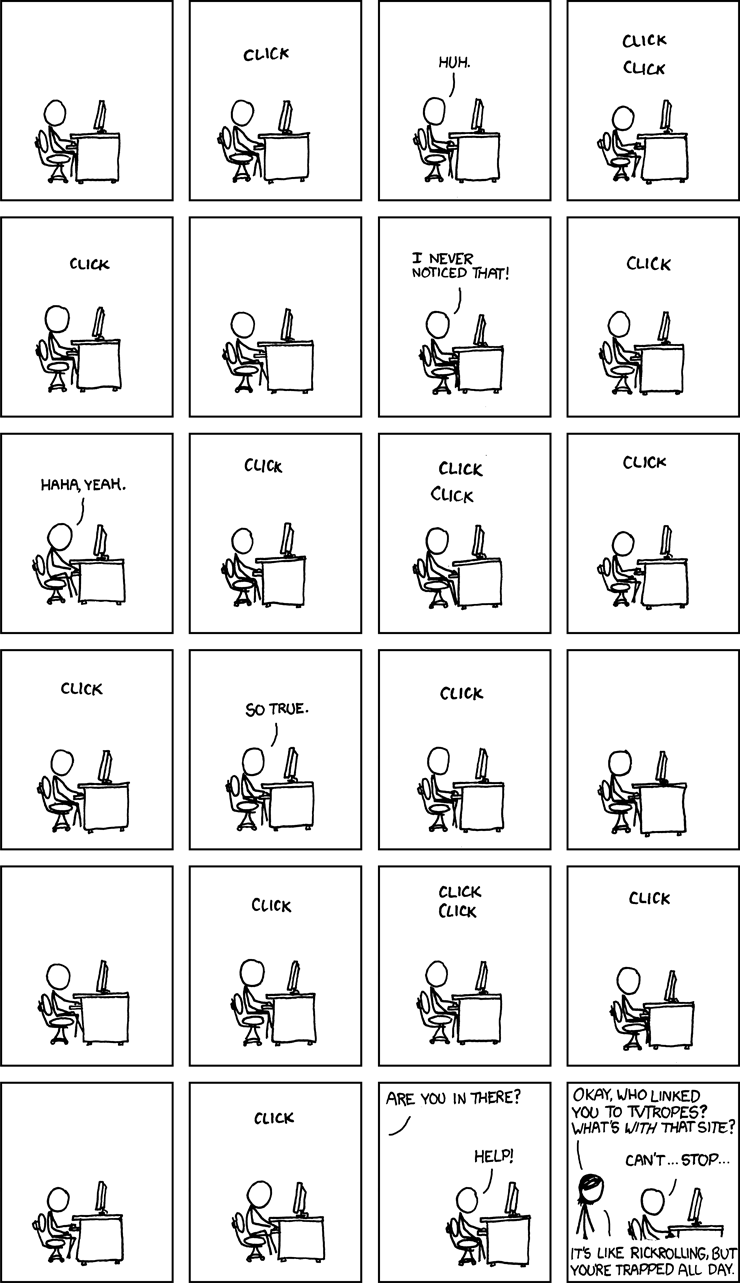
There's a world of difference. The online version is hyperlinked (in fact, its one of those charmingly old-fashioned sites, relying on plain html - the kind you hardly see any more) - and is extremely distracting, because you tend to go down - not a rabbit hole, but an absolute warren.
(Obligatory XKCD)
Reading the chapter in the book is very different - because you go through the narrative, pausing only to underline and mark stuff to look up later.

Nebeneinander Nacheinander

I'm wondering why I'm doing this. I am a literary snob, but an inverse snob. Given a choice between Edgar Wallace and David Foster Wallace, I will always go for the Feathered Serpents, the cabal of Just Men, and Mr Reeder with his rolled up umbrella. I would rather read Agatha Christie than Virginia Woolf, Lawrence Sanders than DH Lawrence, PG Wodehouse and Dashiell Hammett over everybody else.

So why am I trying to read Joyce? He's famously literary, loved by critics, very much part of the canon. And a modernist. And I wonder - is it some kind of snobbery that makes me want to read it?

I wasn't so close-minded before. When I was in college, I read reasonably omnivorously. Reveled in Stephen King and Tolkien and Conan Doyle, but also read the Castle and the Trial. We read Chaim Potok and Bernard Malamud and Scott Fitzgerald and Hemingway (I can still hear Macho repeating the name 'Potok' with childish glee). I remember getting into TS Eliot after listening to Highway 61 Revisited, and from there, via Christopher Ricks to Howl and Moloch.

Somehow - maybe as a result of the serious readers I met in later in real life - I closed myself off. I stuck to pulp and crime, genre fiction and comic books - a luxury for someone growing up in pre-liberalization India, where the superhero stories you read came in comics published by Chandamama.

As I wrote earlier, maybe reading Joyce would be like playing Dark Souls, where the sheer brutality of the gameplay kept you from the payoffs of mastering enemies and their moves, figuring out attack patterns of the bosses - to that final feeling of achievement you got when Gwynn (or Gehrman in Bloodborne) finally collapses and the achievement dings on the top of your screen.

This diffidence I feel about Ulysses, this fear of my own pretentiousness, also makes me question my own enjoyment of the book. It took me a lot of listening to classical music before finding pieces that I liked - the choral was probably the easiest to like, but going from there to the Goldberg variations or the Nocturnes or Mahler's 9th took me a long time - and these are pieces generally understood to be much more accessible than - oh I don't know - a Stravinsky. And when I'm reading, something at the back of my mind wonders "Am I trying to acquire a taste?"

And I suppose the answer is - "If you're enjoying it, go for it".

And I am enjoying it. Not in the way I enjoy Hammett, where the terse prose rushes me through tales of greed and violence; not in the way I enjoy Pratchett, where he makes me grin - just before he makes me think; not in the way I enjoy Wodehouse, where laughter is the effect of sheer, effortless mastery of the language. Reading Joyce (with references) is like reading a solved cryptic puzzle, and you see the kind of effort that went in only when you understand how the clues fit in.

Nebeneinander Nacheinander

I'll probably write more about Proteus, but at the end of it - I came away with an impression of having read something beautiful.  And the words Nebeneinander Nacheinander are a part of that. The words are a reference to Gotthold Lessing's Laocoon: On the Limits of Painting and Poetry. "[Lessing’s Laokoon distinguishes] between poetry, which deals with objects one after another in time (nacheinander…), and sculpture and painting, which deal with objects next to one another in space (nebeneinander)"

Space and time.
Close up and long shot
Cross-section and time series
Stop and go
Balance sheet and P&L

Nebeneinander and Nacheinander.
It's become a mindworm, a thought-equivalent of a earworm, and now I'm trying, like Stephen, to shoehorn every duality into these two words.

The other thing about Proteus, especially with Stephen on the beach,  is that this is so close to my experiences of being stoned. There's an appreciation of the world around, thoughts like an explosion of stars in the firmament of the mind - but one following the other. (Nebeneinander, Nacheinander). There's the sudden paranoia at the sudden appearance of the dog - the live one - the distant interest in its activities, and the spiraling back to dead mother, unknown woman and daydream of desire, a flash to the sensuous, of breeze on the face, remembered quotations (Full fathom five thy father lies - which sent me on to Eliot who used "Those are pearls that were his eyes, and from there to Hitchcock, whose Rich and Strange I saw in the British Council oh so long ago)

Since this isn't a book in the conventional sense - I don't think I will go to the next chapter just yet.
I'll read Proteus again.


Tuesday, 18 February 2020

Reading Ulysses - Nestor

My Ulysses Read - 2
Ah Nestor. The old windbag. Full of unheeded advice and stories of past glories. General tool, who is respectfully listened to and ignored, the general who needs to be rescued from the battlefield. (At least, that's Nestor in the Iliad. In the Odyssey, Nestor is a different person entirely. Courteous, devout and a good host, who takes in Mentor and Telemachus, and points them to the direction of Menelaus.
The parallel of Mr Deasy is more in keeping with the Nestor of the Iliad than of the Odyssey.  Deasy is a Tory, an old man who rattles on about Ireland's history and writes letters to the papers about Foot and Mouth disease. He pays Stephen, but rubs in the fact that Stephen owes money to lots of people.
The theme for this chapter is "catechism" according to Gilbert, and "Wisdom of the ancients" according to Linati.

Here are the schema entries:
Gilbert
TitleSceneHourOrganColourSymbolArtTechnic
NestorThe School10am-BrownHorseHistoryCatechism (personal)
Linati
Nestor9 — 10 a.m.Brown HistoryThe wisdom of the ancients
And the chapter begins with a catechism - a Q & A session, call & response, call it what you will. And its history, about Tarentum, and Pyrrhus, the man who gave us the Pyrrhic victory. I wonder if that's supposed to mean something - in the context of the Irish struggle against Britain, or in a more personal context - that every victory we win is never worth the cost of the battle?

"Thought is the thought of thought".
OK. What does that mean? It's not like a "Rose is a rose is a rose", it's something that sounds good, but again, very "pale parabola of joy"-ish. But it can lead to thought being the enemy of action, another misquoted line - but one which came much later.

I kind of get Stephen here, looking at a bunch of rich kids, their futures already made because of their parents, while he grapples with the absence of his mother. I get the routine of unprepared lessons, of a job indifferently done. 
And I get Mr Deasy - there are so many Deasys in my own family - or atleast there were. Dead now, most of them. Conservatives, staggeringly hypocritical, parsimonious, and proud of it. Full of advice and opinion, and yes, catechisms, in their own way.
— Because you don't save, Mr Deasy said, pointing his finger. You don't know yet what money is. Money is power. When you have lived as long as I have. I know, I know. If youth but knew. But what does Shakespeare say? Put but money in thy purse.

— Iago, Stephen murmured.

He lifted his gaze from the idle shells to the old man's stare.

— He knew what money was, Mr Deasy said. He made money. A poet, yes, but an Englishman too. Do you know what is the pride of the English? Do you know what is the proudest word you will ever hear from an Englishman's mouth?

The seas' ruler. His seacold eyes looked on the empty bay: history is to blame: on me and on my words, unhating.

— That on his empire, Stephen said, the sun never sets.

— Ba! Mr Deasy cried. That's not English. A French Celt said that. He tapped his savingsbox against his thumbnail.

— I will tell you, he said solemnly, what is his proudest boast. I paid my way.
The first thing I wanted to know was: "Who was the French Celt?" But unfortunately, that seems to be a red herring.  Scottish author, John Wilson, writing as "Christopher North" in Blackwood's Magazine in 1829, is sometimes credited as originating the usage. But Wikipedia has a whole page on the possible origins of this phrase, and the various empire it referred to, dating all the way back to the Bible.

The other thing that struck me was the "Iago" quote. My grandfather was full of quotes from Shakespeare - not from any reading of the plays, but half remembered scraps from a book of quotations.

But this made me wonder, yet again, about context. Is a quote automatically suspect - and untrue - because it came from Iago? That in context, it was malicious? What about the meaning you take away from it? Does a quote become less true if someone repellent said it.

There's this bit, which could easily make it to a thousand greeting card platitudes, inspirational Twitter and political campaigns:

"And I can fight only for something that I love, love only what I respect, and respect only what I at least know"

It sounds perfectly sensible and logical. Does it become automatically suspect because it was said by Adolf Hitler?

Anyway, that's another track altogether.

Returning to Nestor and the schema, Sargent, the ugly, mathematically-challenged student, I suppose, is Pisistratus (though he isn't Nestor's son).  Who then is Helen?
But overall, an interesting chapter. There's a ton of references I don't get, but I like this kind of reading. Kind of takes me back to the days - pre-internet days - when I discovered TS Eliot, and was trying to figure out the lines, using the annotations.

Tuesday, 11 February 2020

Reading Ulysses - Telemachus

My Ulysses Read – 1
I've always wanted to read Ulysses. It's a strange thing. On the face of it, it's the kind of book that I should despise. It's been called a masterpiece, in so many ways, by so many people. It's supposed to be dense, and a difficult read. It's supposed to packed with allusions and references that even literary scholars have difficulty getting. And, most importantly, not much happens, there are no  murders, no violence, and the sec that shocked people in the 1920s just seems quaint in the context of fauxcest and bukkakes peddled by millions of porn sites online.
Then there's the cultishness of Joyce worship. That, by itself, is not a positive or negative – Casablanca is recognized as the classic it is because it was a cult favourite in Harvard in the 60s. Cult followings are responsible for so many long-lived cultural products – whether its literature or film or music. But the Joyce cult, with it's instagrammable Bloomsday outings in Dublin, the regular posts that appear on social media – all seem to showcase at a sense of achievement: “I read one of the most difficult novels written in the 20th century, and I loved it!”  It does, in a way, seem snobbish.
But because I like to read about books, and about authors, as much as I like to read themselves, I know a little about Ulysses. I know that Joyce wrote keys to understanding the book for friends -  the so-called Linati and Gilbert schemas, with each chapter allocated its own colour, title, symbol, organ (!) and relevant artform.
(I wonder if Joyce was just taking the piss here)
I've read the Odyssey, of course. Or atleast, I've read an abridged version when I was young, and I read Butler's translation when I was older. I know that there are parallels between the Odyssey and Ulysses, a correspondence between Joyce's chapters and the books that make up Homer's epic – but I thought it was a one-to-one thing, 24 chapters in Joyce, one for each hour of the day, each linked to one of the 24 books that make up the Odyssey, but I was mistaken. There are only 18 chapters in Joyce's book.
I wonder why I am doing this. I probably will have nothing new to say. What I will want to say has probably been said better and more succinctly by more intelligent people. The only thing here is my own ego - that despite everything, I will have something to say. And whatever else, putting your thoughts down in words also has the effect of making things clearer in your mind.
So here goes. The first chapter.

Telemachus

The first book of Homer's Odyssey doesn't have a title, but is mostly about Telemachus losing his patience with Penelope's suitors. Telemachus is still young – a teen? - and the suitors brush him off and party on his livestock and pressure his mother to marry one of them. So a lot of it is exposition – in fact – the Odyssey opens with Zeus telling Athena that yes, it's high time Odysseus returned home, and Athena going down to Ithaca to keep Telemachus' spirits up.

“So now all who escaped death in battle or by shipwreck had got safely home except Ulysses, and he, though he was longing to return to his wife and country, was detained by the goddess Calypso, who had got him into a large cave and wanted to marry him. But as years went by, there came a time when the gods settled that he should go back to Ithaca; even then, however, when he was among his own people, his troubles were not yet over; nevertheless all the gods had now begun to pity him except Neptune, who still persecuted him without ceasing and would not let him get home.”

Now, this is the first chapter as per the Linati schema.
TitleTimeColourPeopleScience / ArtMeaning
Telemachus8 — 9 a.m.Gold / white TheologyDispossessed son in contest
TitleTechnicOrganSymbols
TelemachusDialogue for three and four,
-HamletIrelandStephen
And this is the Gilbert schema for the first chapter.
TitleSceneHourOrganColourSymbolArtTechnic
TelemachusThe Tower8am-White / goldHeirTheologyNarrative (young)
Now, the time part of it is quite obvious, as is the place. The colour - well there are references to Buck Mulligan's teeth - white and gold, as well as Stephen's thought "Chrysostomos".  The dispossessed son is Stephen - whose mother has just died (But do we know anything about Mulligan's mother? Or Haines'?). Stephen is the heir - and the symbol? Which Stephen? Daedalus? That seems too obvious. St Stephen - the first martyr of Christianity? Hamlet and Ireland, I get, the latter especially when Stephen talks about his two masters.
As for the people, Stephen is Telemachus, fine. Mentor, atleast in the second chapter of the Odyssey, is Athena, but what's the correlation? Given Stephen's dislike of Mulligan, it kind of makes sense to think of him as Antinous, and Haines as another unwelcome guest, the suitor. But the only other woman mentioned in the chapter is the woman who serves them, and is she Penelope? Or is she Athena? I suppose I'm being oversimplistic to expect a one-to-one correspondence between the schema and the chapter, but it is puzzling,
Is this normal?


Wednesday, 5 February 2020

Reading Ulysses

I've always wanted to read Ulysses. It's a strange thing. On the face of it, it's the kind of book that I should despise. It's been called a masterpiece, in so many ways, by so many people. It's supposed to be dense, and a difficult read. It's supposed to packed with allusions and references that even literary scholars have difficulty getting. And, most importantly, not much happens, there are no  murders, no violence, and the sec that shocked people in the 1920s just seems quaint in the context of fauxcest and bukkakes peddled by millions of porn sites online.
Then there's the cultishness of Joyce worship. That, by itself, is not a positive or negative – Casablanca is recognized as the classic it is because it was a cult favourite in Harvard in the 60s. Cult followings are responsible for so many long-lived cultural products – whether its literature or film or music. But the Joyce cult, with it's instagrammable Bloomsday outings in Dublin, the regular posts that appear on social media – all seem to showcase at a sense of achievement: “I read one of the most difficult novels written in the 20th century, and I loved it!”  It does, in a way, seem snobbish.
But because I like to read about books, and about authors, as much as I like to read themselves, I know a little about Ulysses. I know that Joyce wrote keys to understanding the book for friends -  the so-called Linati and Gilbert schemas, with each chapter allocated its own colour, title, symbol, organ (!) and relevant artform.
(I wonder if Joyce was just taking the piss here)
I've read the Odyssey, of course. Or atleast, I've read an abridged version when I was young, and I read Butler's translation when I was older. I know that there are parallels between the Odyssey and Ulysses, a correspondence between Joyce's chapters and the books that make up Homer's epic – but I thought it was a one-to-one thing, 24 chapters in Joyce, one for each hour of the day, each linked to one of the 24 books that make up the Odyssey, but I was mistaken. There are only 18 chapters in Joyce's book.
But, with all this, there is also the certainty that I'm overthinking this.
So anyway, this was my resolution for 2020, something that I wrote about here, and I have taken my first tentative steps towards the omphalos of Telemachus.

Sunday, 2 February 2020

Humboldt's Gift

I just finished reading Saul Bellow's Humboldt's Gift. Bellow is not the kind of author I would reach for, and he's the kind of author you would know about, maybe read a review of one of his books - maybe know a few details that would help you with a pub quiz - that kind of thing.I still don't know why I picked up Humboldt's Gift. Maybe it was the cover of the edition I found, tucked away in one of the shelves in Blossoms, reminiscent of the bestsellers of the 70s and 80s - Irving Wallace, old Harold Robbins editions before they became standardized with covers of attractive women. Plus there was this bit on the cover: “#1 bestseller”, while the back cover told me that the book had been “6 months on the New York Times bestseller list”.
It begins with the narrator Charles Citrine, now a fit, middle-aged man, taking a bus from the Midwest to New York's Greenwich Village to meet a poet who had just written an acclaimed book of poetry. From there, the narrative loops and whorls around – to Humboldt's squalid death in a cheap hotel, through Citrine's interactions with minor mobster, his ongoing divorce case with a venomous wife, his abject passion for a voluptuous(that word seems so dated, but I can't think of anything that fits better) woman named Renata and his worries with money. But it keeps returning to certain themes – Humboldt's fall and the role of poetry in America, and anthroposophy.I had to look up anthroposophy – and also Rudolf Steiner, who is mentioned several times during the course of the book, and frankly, it seems like a lot of ridiculous mumbo-jumbo. It's not that I consider mysticism ridiculous – I am, after all, a Hindu, and believe in the mystic experience as transformative, but anthroposophy just sounds silly to me. And if I want Western takes on mysticism, I prefer Hesse.Of course, how you respond to books is as much a function of where you find yourself in life, as much as the content of the book. Maybe I would have been more receptive to anthroposophy when I was a college student, but then I was able to find profundity in TSKV Iyer's textbook on circuit theory because I was stoned out of my mind most of the time.Citrine himself, I found boring. Quite appropriately – because boredom is a big deal to him. His opus was supposed to do to to boredom what Marx had done to capitalism or Malthus had done for population. He is self absorbed, led by his dick, passive – a bystander, but unattractively so. People have called the book funny, but looking at Citrine, its more about ridiculousness, in terms of the things that happen to him. He's like a punching bag – his beloved Mercedes is trashed by baseball bat wielding goons, he's taken for a hitman when Cantabile threatens a lawyer, he's left looking after his beloved Renata's son while she is enjoying herself with her undertaker boyfriend.Given that Citrine is supposed to be Bellow himself, it's an incredible act of self mockery. But there also seems to be genuine rage in the depiction of his divorce. Humboldt doesn't fare much better – abuser, drunkard, and eaten up by envy. In fact, the only people who seem to have their shit together are George Swiebel, Citrine's childhood friend, and Citrine's brother Julius. Julius, who is mentioned occasionally through the book, makes an appearance towards the end – and the description of him, and his wife, as he prepares himself for surgery, is one of the best parts of the book.And the book does have a lot of good parts. There's a beautiful section, early on, as Citrine is being driven through Chicago, and he describes, among other things, a skyscraper under construction. The letter that Humboldt writes Citrine at the end made me surprisingly emotional, as emotional as Citrine himself felt.One thing that struck me was Bellow's power of description – most forcibly at the Russian baths, especially of the man whose job is to pour water on the hot stones – but its not just there. Cantabile's nostrils “reminded me of an oboe when they dilated”. Demmie Vonghel's large collarbones form hollows, which Demmie, and her similarly built sister, would fill up with water and race. But sometimes, it feels too much, it's constant and unrelenting, and draws too much attention to itself.There's the other theme – that America loves its poets only when they fail, that America is too hard a country, too businesslike for sensitive poets.

It makes me wonder. How true is this? Was this the feeling of a moment in time? Yes, apart from Poe and Crane and Berryman, there was Sylivia Plath (who isn't mentioned at all), and Robert Lowell, who struggled with bipolar disorder all his life.  Of course, I don't know much about American poetry, but Ginsberg died surrounded by family and friends. Langston Hughes died an elder statesman, adored by younger Black poets.  And Americans - and people from around the world - mourned the loss of Maya Angelou, who not only lived and died well, but had a large circle of friends and well wishers. When John Ashbery died at 90, he was still working. Robert Frost may have had a traumatic personal life, but as far as public life was concerned, he was honoured so many times, and he died an American sage. But then again, my knowledge of American poets and poetry is negligible, and Bellow's is an interesting point of view. Despite being celebrated "a poet can't perform a hysterectomy or send a vehicle out of the solar system. Miracle and power no longer belong to him". Personally, that feels off. People - not everyone - but there are always people who are moved by poetry. What moves them will vary, but words have and will always have power. Ultimately, it was an interesting experience. It was worth reading the book, but will I read another Bellow? I'm not sure. But I will not seek them out. And as for the roman-a-clef part, about Humboldt and Delmore Schwartz? I'm curious about Schwartz now. And will probably look his poetry up. (But that, despite my love hate relationship with U2, could also be the fact that the song Acrobat from Achtung Baby was dedicated to Schwartz, and that Lou Reed wrote this about him.)

Monday, 13 January 2020

Dark Souls, James Joyce and Reading resolutions

I just finished Dark Souls.
For those people who are not videogame inclined, Dark Souls is the first of a genre of fiendishly difficult games that require boundless patience, close observation, and agility of mind and response (and fingers) to get through - at least on the first playthrough.

Such stuff as  nightmares are made on: The big guy grinds you to pulp with that hammer - and the little guy(who is three feet taller than you are,  skewers you with his spear - which shoots lightning
It’s almost an exercise in masochism - but, as you get better at understanding the games rhythms and patterns, you get better at dealing with the challenges it throws at you - and overcoming those challenges leads to a such a satisfying payoff.

I first started the game - when it came out in 2011. It received rave reviews from people in the industry I respected, so I bought it.
I played it for four hours - and was unable to progress beyond the tutorial. I switched to something less demanding.
Yesterday, I finished the game. And it left me thrilled, satisfied - and drained.
And I have to decide whether to play it again - or start on its even harder sequel.

Which brings me to Joyce.
Many years back, I tried reading Ulysses. I got half-way through the first chapter, but found it tough going. I gave up. It was in some ways, reinforcement of my own snobbery. This was all “literary stuff”, and it was for pseuds and self-proclaimed “intellectuals”, I told myself - and went back to my Wodehouses,my Clubland heroes and James Bond.
But over time, at various times in the past couple of decades, I have been seeing so much more of people writing why Joyce was special. And this year - pushed by book Twitter - I’ve made a resolution.
I’m going to finish Ulysses.

It maybe, like Dark Souls, there may be times when I think I can’t handle it anymore. There may be times I want to throw the book across the room. But then, there’s also the possibility that I will get the books patterns and rhythms - and find the same kind of exhilaration that I did from the game that I abandoned nine years ago.
When I was a child, my mother used to tell me “Some books are like grapes, you just consume them as they are. Some are like bananas. You have to peel the skin off, before you get to the tasty part. Still others are like coconuts. You have to break the outer shell, strip the intermediate fibre, and then get through the inner shell, before you get to the juice and the sweetness of the kernel”.
So that’s my resolution. To crack open Ulysses and get to the kernel. Whether I find it tasty or not is another matter, but hello again, stately, plump Buck Mulligan.

Wednesday, 15 May 2019

Wodehousing again


I started off wanting this to be a piece about Wodehouse dedications - but after I started, I realized that the excellent folks at Madame Eulalie had already done it - and much more comprehensively than I ever could.
So thought I'd make it about Wodehouse fans and fandom and references to Plum in books and letters and so on
If I was conducting a quiz for Wodehouse fans, I'd probably begin with the question "Which is the first novel by any author referenced by Wodehouse?", and you would reply Great Expectations and you would be perfectly right. But I'm not conducting a quiz, and I'm trying to describe the kind of wiki-walking tab-exploding that looking up Plum can lead you to.
For example, there's this phrase "name and fame". It's not very common these days, but there were quite a few of my relatives who used it - the older ones, who had had an English education but preferred to do their reading in Tamil or Telugu. I've often hear uncles and grand-uncles say that someone has sought "name and fame" - just that phrase in English, the rest in Tamil. But looking at Eulalie tells me that the phrase is a reference to a GA Henty novel. Now Henty was a person of his time, which was the mid 19th century and the Englishman was white, Christian and the apex of evolution, but if you can look past all that, the books are quite fun, in an old-fashioned sort of way.
The Annotations page at Eulalie is a whole fund of information, and provides so many rabbit-holes with just the small subset of books it covers.


It's funny, but it's also so sad. Poor Eliza

The Pothunters took me to Barry Pain's Eliza novels. Another school story took me to F Anstey and Hurree Bungsho Jabberjee, who was obviously the inspiration for Charles Hamilton's Hurree Jamset Ramsingh. But Anstey was also referenced by Charles Rainier in Random Harvest - specifically, the novel Vice Versa ("if you remember your Vice-Versa"), which I later dug up and read and found a precursor to the 100+ body swap books.
But no. I still cringe when I read Baboo Jabberjee, BA

Talking of Hilton, Wodehouse mentions him in one of his letters - saying that he enjoyed Goodbye Mr Chips - which he naturally would have, given that Dulwich, much like Brookfield was a respectable public school, though not in the Eton and Harrow class. But its a pity he stopped reading Hilton after being told that Lost Horizon was a bunch of mystical mumbo-jumbo. There's - at least to my mind - a lot of overlap between Hilton and Plum, and I think he really would have enjoyed Random Harvest or Time and Time Again, and their essential Englishness.
One book that Plum references in his school stories (I know Kipling does, and I think Plum does too, atleast indirectly, when Psmith asks Mike if he is the boy who turns to drink in the final chapter)  That I never did try to read was Eric, Or Little By Little by Frederic Farrar (who, it turns out, was one of Darwin's pallbearers and should not be judged by his literary output) - because, to misquote Kipling, we don't want "any beastly Ericking".

Clubland

I think Psmith in the City was the first book to mention a club - The Senior Conservative. And there was a whole genre of books in popular Brit-lit that started in the 1910s-20s, featuring the so-called Clubland heroes. There were the Bulldog Drummond novels by Sapper with the eponymous hero,  butt-ugly in the books, Ronald Colman handsome in the movies. And one of Drummond's sidekicks, Algy, to all intents and purposes, is a spatted, monocled and seemingly imbecile specimen who would have been greeted by a flying bread roll when he entered the Drones Club. In fact, Algy refers to Plum as a "master brain" in a typical speech in Challenge, the last Drummond novel.
"I was just trying to get the tempo and the first note of the seven-fold Amen," explained Algy. "No, it eludes me. But how right you are—how very right. There is just one academic point, however, on which I would like to join issue with you. Do we exist? Or is it just the figment of a disordered stomach? If you carefully study the works of Einstein and P. G. Wodehouse you will have to agree, that amongst the master brains there is considerable doubt on the subject. Are you really you, or are you a sweet ethereal wraith, wrapped round a central electron?
I prefer Ronald Colman and Joan Bennett, though Phyllis isn't in this

That's not exactly the kind of thing that Bertie would say, but it just might be possible to imagine one of Wodehouse's buzzer heroes (I wonder who came up with that wonderful description) making a similar speech - all Algy does is mix in some obfuscating stupidity.
But maybe Sapper was paying Plum back, because of ...
Ok. In the first Drummond book, the adventure kicks off with Drummond's  valet and cook discussing an advertisement in the paper.
... 'Demobilised officer,' she read slowly, 'finding peace incredibly tedious, would welcome diversion. Legitimate, if possible; but crime, if of a comparatively humorous description, no objection. Excitement essential. Would be prepared to consider permanent job if suitably impressed by applicant for his services. Reply at once Box X10.'
Three years later, a similar advertisement kicks off an adventure involving diamond necklaces, impersonations, pale parabolas of joy (and its less famous sibling, 'the scented, sibilant silence that shimmered where we sat') and flower pots.

Then there are the Berry novels, by Dornford Yates - which, frankly, while being set in the same Edwardian era (yes, the purists will quibble, but you know what I mean) which, while being both pleasant and contemporaneous, do not reference the master - nor do his Chandos thrillers.
Which brings me to the longest lived clubland hero of them all.
Simon Templar made his appearance in 1928, was featured in a movie which had Val Kilmer as the Saint and the amazing Elizabeth Shue in 1997 (it was terrible) and people were talking about a Saint TV serial just a couple of years ago. And Charteris liked Wodehouse, and was his friend. He dedicated The Saint's Getaway to "To P.G. Wodehouse who had time to say a word for the Saint stories, when he could have written them so much better himself". In fact, there's a lot of Wodehousian similie-ing in Charteris - who named his protagonist's Lestrade "Claude Eustace". Here's a sample describing Inspector Claude Eustace Teal after a particularly exasperating encounter with Simon Templar:
"He bit on his chewing gum with the ferocious energy of a hungry cannibal tasting a mouthful of tough missionary"
Another person who Wodehouse adored - and dedicated Very Good, Jeeves to was the author E Phillips Oppenheim - probably the person who most made the Clubland Hero trope. Oppenheimer's most famous book today is probably The Great Impersonation, but he wrote so many - more than a hundred novels, as well as many short stories. To get an idea of Oppenheim's books, here are a few verses that one particular critic had to say about him: (from Roy Glashan's amazing website, an artifact of the web circa 2000)
I have read your latest book, Oppenheim;
it involves a swarthy crook, Oppenheim;
and a maid with languid eyes,
and a diplomat who lies,
and a dowager who sighs, Oppenheim, Oppenheim,
and your glory never dies, Oppenheim.

Oh, your formula is great, Oppenheim!
Write your novels by the crate, Oppenheim!
When we buy your latest book
we are sure to find the crook,
and the diplomat and dook, Oppenheim, Oppenheim,
and the countess and the cook, Oppenheim!
....
If you'd only rest a day, Oppenheim!
If you'd throw your pen away, Oppenheim!
If there'd only come a time
when we'd see no yarn or rhyme
'neath the name of Oppenheim, Oppenheim, Oppenheim.
It would truly be sublime, Oppenheim!
In his WSJ piece on Oppenheim, Michael Dirda (another Plum fanatic), says "As early as 1915, Wodehouse, no less, noted that Oppenheim’s 'easy, distinguished style, the naturalness of his dialogue, and the wonderfully expert story construction in them made his novels unique'"
Oppenheim himself dedicated one of his books to Plum, saying "To My Friend ‘PLUM’ WODEHOUSE Who tells me what I can scarcely believe, that he enjoys my stories as much as I do his".
I have the complete Oppenheim on my Kindle, a steal at Rs 44. And one of my favourite books is The Pawns Count. The Pawns Count is a spy story, but is so much like Leave it to Psmith - without the Wodehouse language, of course, but still quite easy reading. Lutchester, the hero, is much like Psmith, with all the Xanatos Speed Chess-playing, and Pamela Van Dyne, the heroine, combines beauty and brains and an appreciation for eccentricity. Instead of a necklace, its a secret formula, instead of Joe Keeble and Connie, there is the political uncle and his ambitious wife. And instead of Oily Carlisle and Miss Peavey, there is a German millionaire.
Oppenheim, as well as Sapper, were models for Ian Fleming - who makes one mention of a Wodehouse novel in his best novel, from Russia with love. It's the first chapter,. 'Roseland' and Fleming, with his famous 'descriptive lust' is talking about the Russian assassin who has been trained to impersonate an English "chentleman"
"To judge by the glittering pile, this had been, or was, a rich man. It contained the typical membership badges of the rich man's club--a money clip, made of a Mexican fifty-dollar piece and holding a substantial wad of banknotes, a well-used gold Dunhill lighter, an oval gold cigarette case with the wavy ridges and discreet turquoise button that means Fabergé, and the sort of novel a rich man pulls out of the bookcase to take into the garden--The Little Nugget--an old P. G. Wodehouse."

This post started as something, and ended up somewhere else entirely. I still wish I could talk about Anthea Bell looking to Wodehouse for inspiration in translating Asterix in Britain, or Sinclair Lewis ordering all the Wodehouse books to keep him company on a sea voyage. And as this lovely piece by Charles E. Gould, Jr. points out, Lewis actually provided a blurb for Pigs Have Wings:
P.G. Wodehouse has become, as Sinclair Lewis put it, ‘not an author but a whole department of rather delicate art. He is the master of the touchingly inane…of the ultimate and lordly deadpan.
I want to talk about Lawrence Durrell saying that the Mulliner stories were an inspiration for his own Antrobus stories, and oh ... so much more. Maybe, in another couple of years, I will.

1. If the white rabbit from Alice had done his job in the perpetuation of his species, and each of his descendents built their own rabbit holes, there would have been 7.594347e+133 rabbit holes by the time Wodehouse died (assuming six babies each month during the mating season of four months, as rabbits gestate for 1 month).

Saturday, 17 November 2018

Don't Gollup Your Food, Harold

"Don't gollup your food, Harold".

The line popped into my head, unbidden, as it were.

I knew where it was from, but not exactly where.

It's a line from one of PG Wodehouse's Mr Mulliner short stories. And I knew I had to track it down. I knew the background. There's a timid Mulliner who loves a girl. There's a beefy guy who loves her and doesn't want Mulliner to marry her. As things come to a head, Mulliner heads home, where he finds two burglars, Ernest and Harold, helping themselves to his dinner. Ernest and Harold are pretty massive individuals, and are doing justice to Mulliners table and liquor when Harold asks the fateful question
Apart from the whole faux-Shakespearean shtick about the first and second burglar, this section just cracks me up
The result is that the burglars start fighting, knock each other out. Mulliner (this one turns out to be Osbert) calls the police who drag out the two battered and unconscious thugs just as beefy Bashford Braddock lands up, wearing hob-nailed boots to punish Osbert Mulliner for having the temerity to marry Mabel Petherick-Soames by giving him a stomping. Seeing the police, and assuming that Osbert was responsible for the the burglars' condition, Braddock wilts away.

Jeeves and Wooster and Blandings get most of the love, but I'm beginning to think that the Mulliner stories were easily their equal - if not better.

They certainly had some fantastic openings.
Here's Buried Treasure:
The situation in Germany had come up for discussion in the bar parlour of the Angler’s Rest, and it was generally agreed that Hitler was standing at the crossroads and would soon be compelled to do something definite. His present policy, said a Whisky and Splash, was mere shilly-shallying. “He’ll have to let it grow or shave it off,” said the Whisky and Splash. “He can’t go on sitting on the fence like this. Either a man has a moustache, or he has not. There can be no middle course.”
Or the well known - and succint opening to The Story of Webster
‘Cats are not dogs!’

The lines that follow are quite good, too...
There is only one place where you can hear good things like that thrown off quite casually in the general run of conversation, and that is the bar-parlour of the Angler’s Rest. It was there, as we sat grouped about the fire, that a thoughtful Pint of Bitter had made the statement just recorded.
Although the talk up to this point had been dealing with Einstein’s Theory of Relativity, we readily adjusted our minds to cope with the new topic. Regular attendance at the nightly sessions over which Mr Mulliner presides with such unfailing dignity and geniality tends to produce mental nimbleness. In our little circle I have known an argument on the Final Destination of the Soul to change inside forty seconds into one concerning the best method of preserving the juiciness of bacon fat.
There's poetry too. Remember Good Gnus? From Unpleasantness at Bludleigh Court?
A brief suspense, and then at last
The waiting's o'er, the vigil past;
A careful aim. A spurt of flame.
It's done. You've pulled the trigger,
And one more gnu, so fair and frail,
Has handed in its dinner-pail;
(The females all are rather small,
The males are somewhat bigger
And the clubs. Apart from the joy of finding out why the 'Gentleman's gentlemen's" club is called "The Junior Ganymede" (Hans Gruber would have called it the benefits of a classical education), there's the Junior Lipstick, for debutantes, the Senior Test tubes, for brilliant chemists, the Senior Bloodstain, for detectives, and so on...

Most Wodehouse fans love the Buck-U-Uppo stories. And the Story of Webster and its follow-up, Cats will be Cats, but there is so much treasure - not just buried - in these stories.  The sheer ridiculous absurdity - the loopiness  - guarantees grins, giggles, and snorts of laughter.

Look at  Lancelot Mulliner's emotions when he sees Angela, the daughter of Lord Biddlecombe. "His heart leaped like a young gherkin in the boiling vat" (Lancelot is the nephew of a pickle-manufacturing millionaire). And read "Darkling, a Threnody" and wonder who inspired it.

Or take the discussion that opens "Came the Dawn", where a Stout and Mild says "Yes, gentlemen, Shakespeare was right. There's a divinity that shapes our ends, rough hew them how we will". And then it turns out what prompted this statement was that his dog had won a prize for short-haired tortoiseshells at a cat show. Which then segues beautifully, a few sentences later, into this line, "No Mulliner has ever won a prize at a cat show. No Mulliner, indeed, to the best of my knowledge, has even been entered for such a competition".

I could talk about the Order of the Crimson Edelweiss, carrying with it the right to yodel in front of the Vice President. Or the entirety of The Smile that Wins, featuring, among other things, the Bramah Yamah Gold Mines flotation. (I can imagine plum with his Encyclopedia Brittanica, looking up the list of Hindu gods and goddesses, and discovering that the name of the creator god rhymes -atleast on paper - with the god of death).

Ultimately, when I think of the Mulliner short stories, they're like the memory of these boiled sweet cough lozenges of my childhood. Sweet, could be savoured or cruched up, and left you breathing a whole lot better when you had them - and the taste lingered...

Thursday, 14 July 2016

Revisiting the Magnet, with Boy's Weeklies and Orwell

Back in 1940, George Orwell wrote a long piece (10,000 words) on magazines like The Gem and the Magnet.  It was called "Boy's Weeklies", and it was a detailed examination of the language, readership, attitudes, and priorities of the stories that appeared in them.
It's hard to think of something comparable to come out today. Firstly, the magazine is dying. Second, it's hard to think of anyone with the equivalent of Orwell's heft as a political and cultural commentator. Third, though there are numerous think pieces, they're companions to "trend stories" in children's writing. Fourth, there are essays and articles about "What kind of book should kids be reading" - promoting books that promote "diversity", the current cultural ideal. And there are the inevitable listicles for people with ever decreasing attention spans.
In, for example, the Magnet's Greyfriars stories, written for and read by a much smaller English-speaking audience than exists today, there's Hurree Jamset Ramsingh, an Indian, Sampson Field, an Australian, Tom Brown, a New Zealander, Wun Lung, a Chinese, Piet Delarey, a South African - and Afrikaner,  Monty Newland, a Jew, and Nappy Dupont, a Frenchman. This probably was one of the most diverse schools in fiction. Of course, the reason for the diversity was the Empire, and the worldwide readership the magazine enjoyed. "It is read in every corner of the British Empire, by Australians, Canadians, Palestine Jews, Malays, Arabs, Straits Chinese, etc., etc," writes Orwell. Of course, the diversity is national, and not racial, but then immigration into the UK, according to Migration Watch, was insignificant before the second world war.
Despite that, both characters of "colour" that figure as students are drawn relatively sensitively - despite the stereotyping. Hurree Singh, for example, is the direct descendent of F Anstey's Hurry Bungsho Jabberjee (who says things like "I am like a duck in thunder with admiring wonderment", and was supposed to be  "a humorous yet truthful study of the East Indian with a veneer of English civilization").   Inky (Singh's nickname) may talk like a twerp and his language is one source of comedy, but as a character, he is as good a person as any other, and rather better than most. He plays cricket beautifully, and is several times described as the best bowler in the school (drawn from Ranji, no doubt, the Indian who could play cricket). He's also much smarter and a better observer than most of his peers, though that's not saying much, since most of his peers seem to be complete blockheads most of the time.
There's Wun Lung, the pigtailed Chinee who "talk velly funny". Very much the inscrutable Oriental, Wun Lung is very much a revolting stereotype most of the time. I can forgive the portrayal of Inky, being an Indian. I wonder if today, a Chinese reader would forgive Wun Lung's portrayal. But when he is at center stage - he is shown as devious, but very nice. A good friend to have in times of need, and with a wicked sense of humour that uses and subverts the very stereotype he represents. In one story, he takes his revenge on Bunter, who has stolen his tuck, by convincing the fat Owl that what he's eaten is the shopkeeper’s cat. It's actually chicken, but Bunter believes him because, of course, everybody knows that Chinese eat anything.
And there's Monty Newland, the Jewish boy. The story where he is introduced is still hard reading - in terms of the sheer amount of prejudice that Newland endures when he comes into the school. And despite following a well-worn groove, it's still quite powerful. He's called a Sheeny and a Shylock when he steps into the school. His study mates try to throw him out, and at one point, he wonders that why, despite his family being in England for centuries, they've always been treated as outsiders and lesser citizens. (Surprisingly, there's no reference to Christ-killing or anything, but that's probably because religion hardly ever figured in these stories. Newland, of course, proves his worth, as all boys must do, by standing up to the school bully, and beating him down. It's also notable that he ends up sharing a study with Dick Penfold, the son of the shoemaker and a scholarship boy. An inadvertent reflection of where Jews stood in the English class system?
The Gem and the Magnet were popular. “They are on sale in every town in England, and nearly every boy who reads at all goes through a phase of reading one or more of them,” wrote Orwell. Evelyn Waugh was a fan. So was Noel Coward. And VS Pritchett. When Christopher Hitchens was asked by a godmother to choose any six books he wanted, his first choice was “a garish series of the adventures of Billy Bunter”.
There’s this lovely book called The Intellectual Life of the British Working Class, by a guy called Jonathan Rose. It covers, in some depth, what the miners and canners and fishmongers and weavers read, from the mid-late 19th century on, and it devotes a chapter to The Gem and the Magnet. Rose looks at the influence of these magazines and the school stories on their readers – most of whom were drawn from the working classes.
The books were inherently conservative, and Rose wonders if any of their readers – much older now, of course – would say “These books indoctrinated me in a bourgeois cultural hegemony, and I’m a better man for it”, and finds that there are quite a few. Of course, this comes from a time when it was possible to be culturally conservative, but politically radical. A number of the Magnet’s fans got their ideas of honour and ethics from these stories. According to Paul Fletcher, the son of a colliery worker, the stories defined a code of honour that was as well defined as the scriptures were nebulous. Later, in 1972, Fletcher, would write that “(Some), rejoicing under the name of intellectuals, would find it difficult to stifle their mirth at yarns which a beginning, a middle and an end, and were completely free of drugs, dolls, crude Americanisms, and lavatory wall adjectives. But they don’t matter. Harry Wharton and the Famous Five set an example of ‘How to play the game’, and their code of honour, effete as it may seem now, was something which society as a whole could do with”.
The Famous Five in the quote above refers not to Harry Wharton, Frank Nugent, Bob Cherry, Hurree Jamset Ramsingh and Johnny Bull. The term was coined in 1912, and Enid Blyton used it in 1951, well after the first books were published. There was also a Secret Seven, a school secret society that dealt out justice to errant prefects using Guy Fawkes masks. It’s unlikely that David Lloyd pinched the idea for V’s mask from, but still, it’s a fascinating titbit. Harry Wharton’s father died on the Afghan frontier, serving in the Loamshire Regiment. This was in 1908.  Wiki the Loamshire Regiment, and you’ll find this:
“Loamshire Regiment is a placeholder name used by the British Army to provide examples for its procedures. For example, the Loamshire Regiment is provided by the British Forces Post Office to show how to write a British Army address, and is used to set out specimen charges for violations of military law. It is used in Hesketh Hesketh-Prichard's Sniping in France, a World War One manual for training British Army sharpshooters.”
Sniping in France was published in 1920. The Loamshire Regiment was also used by Sapper – Bulldog Drummond is a Loamshire Regiment man. Since then, the Loamshires have appeared elsewhere, including Waugh’s Men at Arms and Powell and Pressburger’s The Life and Death of Colonel Blimp.
But if anything, the lasting legacy of these magazines, these stories – mostly written by Charles Hamilton – must be the “Schoolboy Code”. Or the “Schoolgirl Code”, filtered as it was through Enid Blyton’s St Clare’s and Malory Towers books. After all, Blyton, the daughter of a cutlery salesman, was born in 1897, and would have been among the Gem and Magnet’s significant female readership when she was growing up.
On a personal basis, my school, at least in the 70s and 80s, was making its name as a crammer. We had some good teachers, of course, and some lovely people studied there, but as an institution, I have very little love for it. We yearned for the last bell, waiting for freedom from the endless tedium poorly taught maths and science. When I’m at home, I take a walk by “the old school” almost every day, but all I feel is mild surprise about how small the classrooms were.
So it’s not surprising that these school stories, with their pranks and rags, their feeds and feasts would work their charm, 5099 miles and seven decades away. Oh, I never saw a Magnet or a Gem, but I remember the bright yellow Cassell paperbacks, and the Armada publications with their ugly cover art, borrowed from Eshwari lending library on Lloyd’s Road.
The “Schoolboy Code” is irrelevant today, of course. It’s was irrelevant when I was a schoolboy as well, but I didn’t know that. As Robert Roberts would write “Greyfriars gave us one moral code, life another, and a fine muddle we made of it all”.